Krakow in a Day: Wawel Castle, Old Town, and Pierogi
Stepping into Krakow feels like opening a storybook you didn’t know you’d been craving. A castle crowns a green hill above the river. Church towers rise over a medieval Old Town that still hums with life. And everywhere, the scent of butter and onions promises a plate of pierogi. If you have just a day or two, this is the city’s essential trio—Wawel Castle, the Old Town, and Poland’s most comforting dumplings—woven into one unforgettable experience.
Planning a one-day Krakow itinerary? Here’s how to see Wawel Castle, explore Old Town Krakow, and find the best pierogi—without rushing.
At a glance: Krakow itinerary essentials
- Wawel Castle visit: 2–3 hours
- Walk from Wawel to Main Market Square: 10–15 minutes along the Royal Route
- Typical pierogi price: 20–45 PLN per portion
Wawel Castle: Where Kings and Legends Reign
Krakow’s identity unfurls on Wawel Hill. This is not just a castle; it’s a symbol of Poland’s soul. For centuries, Polish kings lived and were crowned here. National treasures were guarded here. And today, visitors queue not just to see art and architecture but to feel the weight of stories that shaped a country.
The heart of a nation, in plain language
Wawel Castle bundles layers of history—Romanesque foundations, Gothic chapels, Renaissance courtyards, Baroque embellishments—into a single, walkable complex. It’s the sort of place where every corner feels like a reveal: a glinting dome, a stone staircase polished by royal footsteps, tapestries that traveled through war and exile to return home.
You’ll see schoolchildren craning their necks, tour guides tracing lines through time, and travelers moving at an unhurried pace because that seems to be the only way to absorb this hill. Wawel asks you to slow down—not out of reverence, but to let the details land.
What not to miss on Wawel Hill
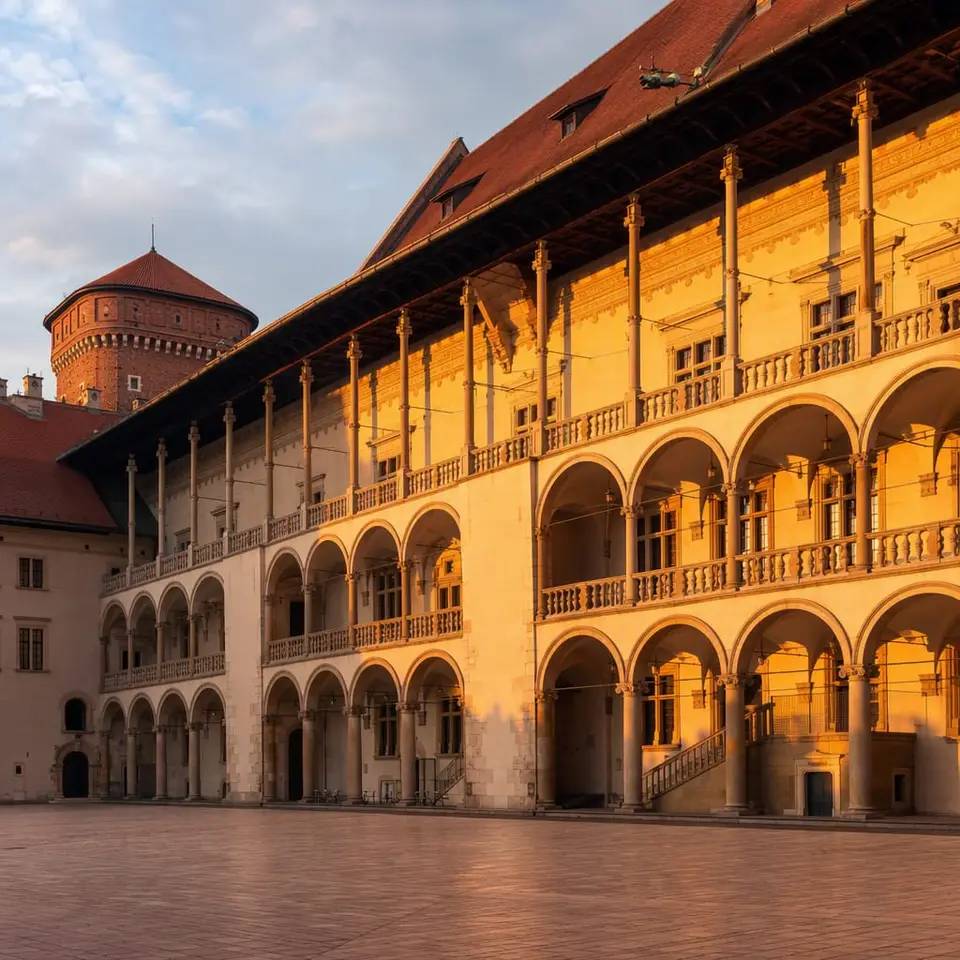
- The arcaded Renaissance courtyard: Walk in and look up. The elegant, three-tiered galleries seem to float around you. It’s serene and photogenic at any hour.
- Wawel Cathedral: The site of coronations and royal tombs, with chapels tucked like jewels around its flanks. Don’t miss the golden-domed Sigismund Chapel, one of the Renaissance masterpieces of Central Europe.
- The Sigismund Bell: Climb the wooden stairs of the northern tower to stand beside the massive 16th-century bronze bell. Tradition says touching it and making a wish brings good fortune. It’s a creaking, memorable climb; take it slowly.
- State Rooms (Royal Apartments): Picture grand ceremonies and quiet intrigues among carved ceilings and tapestries, including the famed collection commissioned by King Sigismund II Augustus.
- Crown Treasury & Armoury: Regal insignia and finely crafted weapons tell stories of power, pageantry, and Polish resilience.
- Dragon’s Den (Smocza Jama) and the dragon statue: Descend through a limestone cave and emerge by the Vistula River, where a bronze dragon breathes fire on schedule. Kids love it; grown-ups do, too.
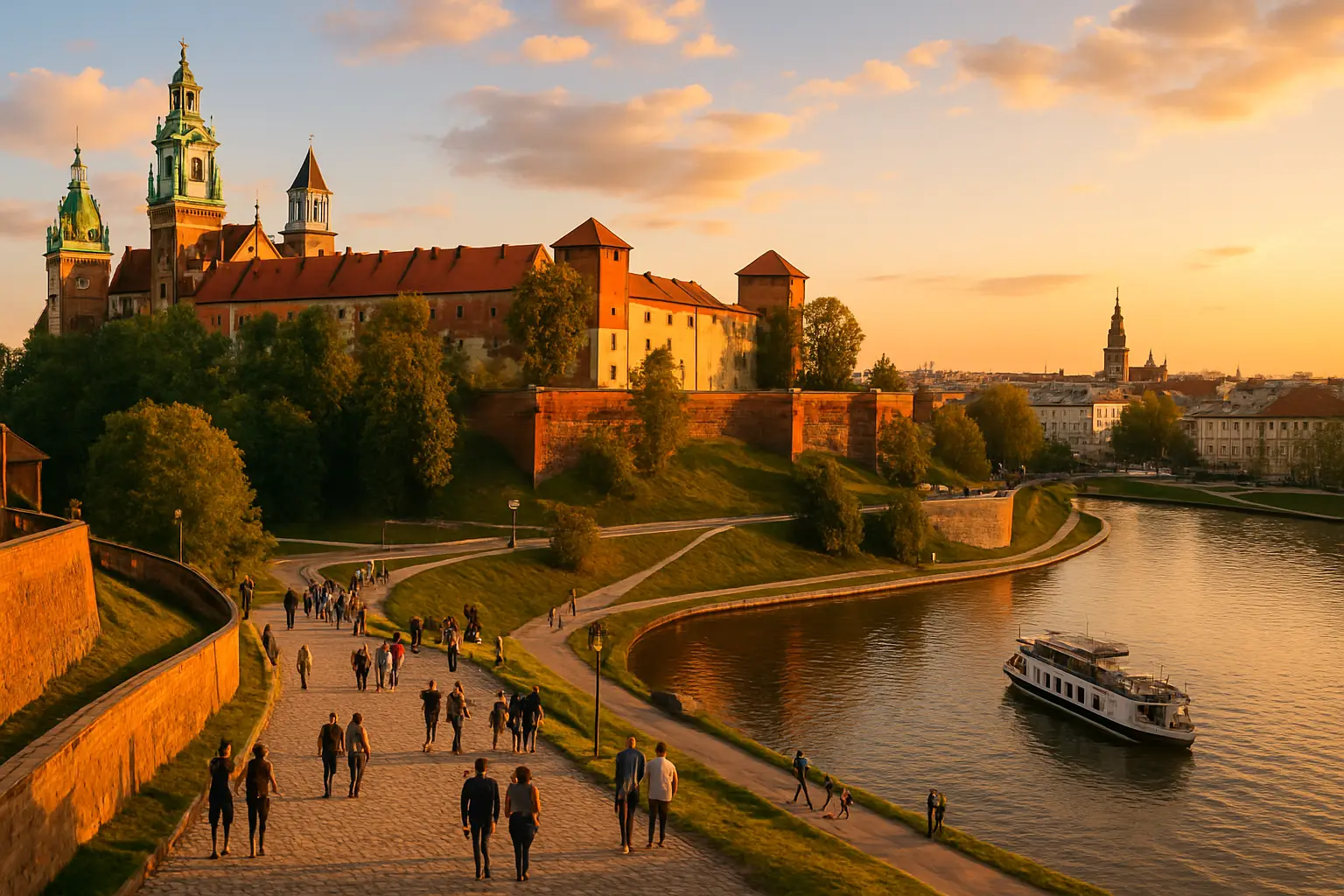
- Views over the Vistula: The ramparts and gardens gift you sweeping vistas of the river and the city. Sunrise casts the water in silver; sunset turns the castle walls honey-gold.
- A curious legend spot: The so-called Wawel “Chakra” stone, believed by some to radiate energy, is tucked near the Cathedral. Whether you feel anything or not, it’s a fun bit of local lore.
The magic of Wawel isn’t about a single room—it’s how the hill layers story upon story until you feel you’ve stepped inside Poland’s collective memory.
Practical tips for visiting Wawel Castle
- Timing: Arrive soon after opening for thinner crowds, especially in spring and summer. Weekday mornings are calmer than weekends.
- Tickets and hours: The cathedral precinct is partly free to enter, but towers, crypts, State Rooms, the Treasury, and temporary exhibitions require separate tickets or time slots. Availability and timed entries vary by season—check official hours and current exhibitions before you go. In peak season, popular entries can sell out, so booking ahead is wise.
- Dress code: In the cathedral, modest attire and quiet respect are appreciated. Shoulders covered is a courteous norm rather than a strictly enforced rule; hats off inside.
- Guided help: A guided tour or audio guide adds context you’ll appreciate. The complex is big; context prevents “museum fatigue.”
- Accessibility: Cobblestones and stairways are part of the charm—but take your time. If stairs are a concern, prioritize ground-level highlights and the courtyard.
- Photography: Flash is restricted in some interiors; check signs and be respectful of services in the cathedral.
As you step back down from the hill, the city unfurls ahead. The Royal Route threads from Wawel straight into the Old Town, tying centuries together in a fifteen-minute walk.
Old Town Krakow: Medieval Streets Alive with Culture
Krakow’s Old Town is the sort of place that asks you to wander without an agenda. You’ll hear the clip-clop of horse-drawn carriages, smell fresh obwarzanek (the local twisty bread ring) from street vendors, and feel the tug of side streets that always seem to hide another courtyard. If you’re brainstorming things to do in Krakow for a short stay, let this neighborhood lead the way.
Main Market Square: A grand stage for daily life
The Main Market Square (Rynek Główny) is one of Europe’s largest medieval squares, but its superlatives aren’t what make it special. It’s the energy—the way morning deliveries give way to lunchtime chatter, and how the whole square glows at dusk as café lights flicker on.
At the center stands the Renaissance Cloth Hall (Sukiennice), once a hub of trade in textiles and spices, now busy with craft stalls. On one end, the Town Hall Tower plants a Gothic statement against the sky. And rising above everything is St. Mary’s Basilica, a church that looks like it could take wing.
St. Mary’s and the trumpeter’s song
Every hour, a trumpeter appears in the taller tower of St. Mary’s to play the Hejnał, a short, haunting melody that breaks off mid-phrase. The story goes that centuries ago, a watchman sounded the alarm to warn the city of invaders; an arrow cut him short. The interrupted tune honors that moment, a small echo of bravery that never gets old.
Step inside St. Mary’s if you can—the polychrome vaulting and the carved altarpiece by Veit Stoss are breathtaking. If you want the hush of the interior with fewer people, early morning or late afternoon before closing can be gentler times.
Cloth Hall below and above: Markets and museum
Inside the Cloth Hall, browse stalls for amber jewelry, lace, woodcarvings, and local crafts. Upstairs, the Gallery of 19th-Century Polish Art offers a compact, satisfying collection. Beneath the square, the Rynek Underground Museum brings medieval Krakow to life with excavated walls, market relics, and multimedia displays—perfect if you love context and want a cool break on a hot day.
Along the Royal Route: Gates, streets, and gardens
- St. Florian’s Gate and the Barbican: On the northern edge of the Old Town, these medieval defenses still look ready for a siege. The Barbican’s circular brickwork is a favorite with architecture buffs.
- Floriańska Street: Lined with shops and cafés, it funnels you from the gate toward the square. Look up—historic facades hold sculpted surprises.
- Grodzka Street: From the Main Square, follow Grodzka south toward Wawel. You’ll pass churches with ornate interiors, street musicians, and side alleys that pull you in.
- Planty Park: A ring of green around the Old Town where the medieval walls once stood. In spring, it’s a ribbon of blossom; in autumn, a crunchy carpet of leaves. It’s also where locals reclaim a bit of calm from the tourist bustle.
The Old Town rewards the curious: push a wooden door, peek into a courtyard, follow a snatch of music. Krakow is as much about moments as monuments.
When to go, and how to savor it
- Best times: Early morning gives you empty cobbles and soft light. Blue hour and evening bring out the romance of lanterns, especially in summer. In December, the Christmas Market fills the square with lights, pastries, and warm drinks.
- Free walking tours: These start frequently near the Main Square and often end by Wawel. They’re tip-based, a helpful first dive into the city’s stories.
- Climbing towers: The Town Hall Tower offers a moody view over the square; the climb involves narrow steps—take your time.
- Safety and pace: The Old Town is generally safe, lively into the evening, and walkable. Do mind your footing on cobblestones and watch out for trams just beyond the old core.
By now, you’ll have earned a good meal. And in Krakow, that often means something simple, handmade, and utterly satisfying.
Pierogi in Krakow: Savoring Poland’s Comfort Food
If Wawel is the city’s crown and the Old Town its stage, pierogi are the warm embrace waiting backstage. These dumplings are the dish Poles dream about when they’re far from home—a symbol of family kitchens and holidays, now lovingly served in milk bars, modern eateries, and market stalls across Krakow.
What they are—and why they matter
Pierogi are semicircular dumplings, usually boiled until tender and sometimes lightly fried after. The dough is soft and elastic, the fillings a showcase of Polish flavors. They’ve traveled through centuries and regions, changing slightly from house to house, but always landing in the same place: pure comfort.
“Pierogi taste like home,” locals will tell you—even when you’re tasting them for the first time.
Fillings to know and how to order
- Pierogi ruskie: The classic, with creamy potato, onion, and twaróg (a mild, tangy farmer’s cheese). Comfort incarnate.
- Meat (mięsne): Usually minced pork or beef with onion and spices—savory and satisfying.
- Mushroom and cabbage (kapusta i grzyby): Earthy, aromatic, beloved around the holidays, wonderful year-round if you like umami.
- Spinach and cheese: A vegetarian crowd-pleaser you’ll spot on many menus.
- Seasonal or sweet: In summer, try blueberry (jagody) pierogi dusted with sugar and topped with sour cream. You may also find apple, strawberry, or sweet cheese.
How to choose: Menus typically let you mix and match. A standard portion is 8–12 pieces; if you’re curious, share different plates at the table. You can ask for them boiled (gotowane) or pan-fried/podsmażane for crispy edges.
Toppings speak Polish comfort fluently: fried onions, a dollop of śmietana (sour cream), or skwarki—tiny, crunchy bacon bits that deliver punch. If you’re vegetarian, ask for onions instead of bacon.
Where to try the best pierogi in Krakow
Krakow makes it almost too easy to eat well. Seek out a mix of old-school spots and modern kitchens:
- Bar mleczny (milk bars): These nostalgic, cafeteria-style eateries serve hearty, affordable Polish staples. Pierogi here are authentic and budget-friendly—perfect for lunch. Expect simple interiors and everyday prices.
- Pierogarnie (specialty dumpling restaurants): Dedicated to pierogi, with long menus you can treat like a tasting tour. Traditional fillings sit alongside creative twists.
- Modern Polish bistros: Chefs are riffing on tradition—think beetroot dough, duck confit fillings, or truffle butter. Ideal if you enjoy classic flavors with a contemporary wink.
- Market stalls and street food: During festivals and weekend fairs, you’ll often find stands steaming with pierogi. The Pierogi Festival each August transforms the Main Market area into a dumpling wonderland with tens of thousands served.
Price-wise, pierogi are one of Krakow’s best-value meals. A portion often costs less than many café lunches in Western Europe, making it easy to sample widely without denting your budget.
If you’re gluten-free or vegan, options are growing; ask staff openly—many kitchens are happy to accommodate, and some list special doughs or fillings.
Beyond pierogi: A few bites to round out your Krakow table
- Żurek: A sour rye soup served in a bread bowl or ceramic dish, often with sausage and egg. Comforting and tangy.
- Oscypek: Smoked sheep’s cheese from the Tatra Mountains, grilled and topped with cranberry jam. Salty, smoky, sweet—three notes that sing together.
- Bigos: A hearty hunter’s stew of cabbage and meat, slow-cooked and deeply flavored.
- Local drinks: Try kompot (a lightly sweet fruit drink), regional craft beers, or a tasting flight of Polish vodkas—plum, cherry, and classic rye are common.
Food etiquette and handy phrases
- Tipping: 10–15% is appreciated in sit-down restaurants. If paying by card, tell your server the total you’d like to pay; not all terminals allow adding a tip after.
- Cash vs. card: Cards are widely accepted, but street vendors and tiny cafés may prefer cash.
- Reservations: For popular dinner spots in the Old Town, a reservation helps on weekends and summer nights.
- Phrases that make a difference: “Dzień dobry” (hello), “proszę” (please), “dziękuję” (thank you). Pierogi is pronounced roughly “pyeh-RO-ghee.”
One Perfect Day: Linking Wawel, Old Town, and Pierogi
If you’re short on time, stitching Krakow’s highlights into a single, satisfying day is easier than it looks. The city’s compact center is built for walkers, and the Royal Route practically guides your feet for you. Use this as your one-day Krakow itinerary and tweak as you like.
Morning: The hill of kings
Start at Wawel Hill as the gates open. Drift through the courtyard before the tour groups arrive, then choose your focus: State Rooms and Treasury if you love royal splendor; cathedral and tower if your heart beats for chapels and bells. Pause for river views before descending through the Dragon’s Den to the Vistula embankment for a breath of fresh air.
Fuel up with a mid-morning coffee and a slice of sernik (Polish cheesecake) at a café just off the hill or along Grodzka Street. You’ll blend in with locals doing exactly the same.
Midday: The square and its stories
Walk the Royal Route toward the Main Market Square. Step into St. Mary’s for a few minutes of awe, then emerge just before the hour to catch the trumpet call. Browse the Cloth Hall, then duck underground for the Rynek Underground Museum if you’re craving context.
By now, hunger will find you. Perfect timing.
Lunch: Pierogi, your way
Choose your pierogi adventure: a milk bar for tradition on a tray, a pierogarnia to mix-and-match fillings, or a modern bistro if you want a chef’s take. Share plates. Compare favorites. If you’re tight on time, pierogi also make an excellent grab-and-go picnic in Planty Park.
Afternoon: Gates, gardens, and quiet corners
Head to the northern edge of the Old Town to see St. Florian’s Gate and the Barbican. Loop back through Planty’s shade, keeping an eye out for tiny museums or exhibitions that catch your interest. If legs allow, climb the Town Hall Tower for a view across the square’s stone geometry.
Sunset to evening: Golden light and cellar warmth
As evening falls, the Old Town shifts into a warm glow. Photographers will love the golden hour against facades and church towers. For dinner, you could circle back to a different pierogi spot—or branch out to żurek, bigos, or grilled oscypek at a rustic cellar restaurant.
End with a slow stroll along the river, looking back at Wawel lit up at night. The hill seems to float, and the city feels like it’s exhaling.
Smart Traveler FAQs
How much time do you need at Wawel Castle?
Plan on 2–3 hours for a satisfying visit, longer if you want to see multiple exhibitions. The complex is spread out; give yourself breaks.
Is Wawel Castle worth it?
Absolutely. It’s the single most important site for understanding Polish history—and it’s beautiful to boot.
Do I need to book Wawel tickets in advance?
In high season and on weekends, advance reservations for specific exhibitions help. Some entries have timed tickets and daily limits. If you’re flexible, arrive early and check availability at the ticket office. Note that hours and access can change seasonally.
What’s the best time to visit Krakow’s Old Town?
Early mornings for empty streets and gentle light; evenings for atmosphere. December’s Christmas Market adds magic, while late spring and early autumn offer comfortable weather and long twilights.
Is the Old Town safe at night?
Generally yes. It’s lively and well-patrolled. Use normal city smarts: keep belongings close and stick to lit, busy streets late at night.
How far is Wawel from the Main Square?
A pleasant 10–15-minute walk along Grodzka Street, part of the historic Royal Route.
Where can I find vegetarian pierogi in Krakow?
Nearly everywhere. Look for ruskie (potato and cheese), spinach and cheese, mushroom and cabbage, or seasonal vegetable fillings. Many places mark vegetarian options clearly.
Where can I find the best pierogi in Krakow?
Start with dedicated pierogarnie near the Main Market Square and in nearby neighborhoods like Kazimierz, browse milk bars for classic ruskie with high turnover, and try a modern bistro for creative fillings. Follow your nose and the daily specials.
What are the top things to do in Krakow in one day?
Anchor your day at Wawel Castle (courtyard, Cathedral, one key exhibition), stroll the Royal Route to the Main Market Square, visit St. Mary’s Basilica and listen for the trumpet call, dip into the Rynek Underground Museum, loop by the Barbican and Planty Park, and finish with pierogi.
Is one day in Krakow enough?
One day covers the highlights on foot—Wawel, Old Town, and a great meal. Two to three days let you branch out to Kazimierz, Schindler’s Factory, or a day trip to the Wieliczka Salt Mine.
When is the Pierogi Festival?
Typically mid-August in or near the Main Market Square area. Dates vary each year; check the current festival schedule as your trip approaches.
Can I visit Krakow on a budget and still enjoy the highlights?
Yes. Many Old Town sights are free to admire from outside, milk bars are deliciously affordable, and even paid attractions like Wawel offer good value compared to other European cities.
Final Thoughts: Krakow’s Unforgettable Trio
Krakow isn’t a city that shouts; it invites. Wawel Castle anchors you in a story of kings, queens, and quiet endurance. The Old Town sweeps you into daily life played out on a grand medieval stage. And pierogi—humble, handmade, deeply satisfying—bring you to the table where the city’s heart beats slow and steady.
Put them together, and you have the essence of Krakow in a single, walkable arc: a morning on the hill, an afternoon of cobbled wanderings, an evening of shared plates. Along the way, you’ll collect the small moments that become the memories you keep—a bell’s vibration in a wooden tower, a trumpet call that ends mid-note, a forkful of potato and cheese that tastes like comfort in any language.
When you’re ready, the city will be too. The hill awaits, the square hums, the dumplings are handmade today. What are you most excited to see—and what will you order first?