Tracing Podgórze Under Occupation
Walk the ghetto boundaries into Kraków’s wartime factory district
- Krakow, Poland
- 9 stops
- 98 min
- 1.9 km
- History
Try the first stop

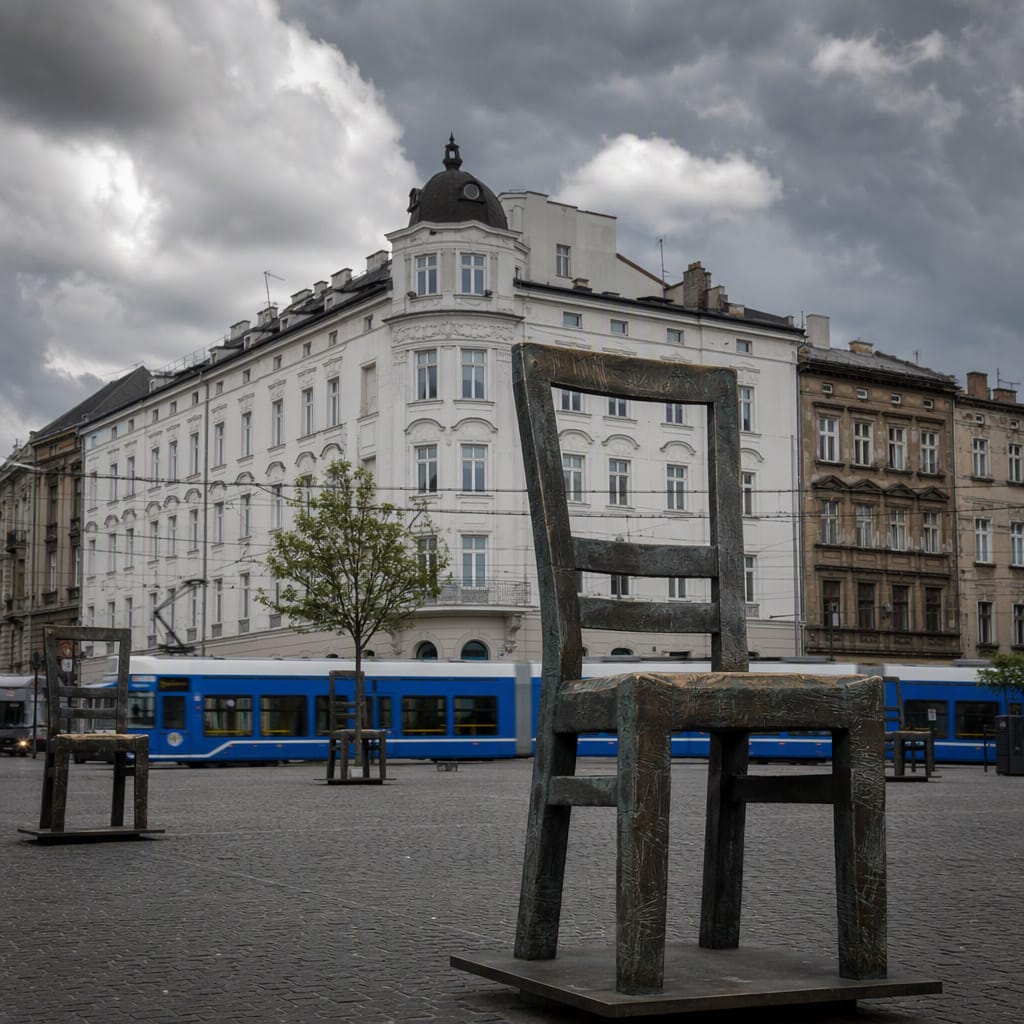
Plac Bohaterów Getta
Empty bronze chairs evoke families assembled here for deportation and death.
Begin in the ghetto’s former central square, called Plac Zgody during the occupation. German forces assembled and selected people here during deportations and the March 1943 liquidation. Today, oversized bronze chairs suggest abandoned furniture and interrupted lives, while passing trams underscore how persecution unfolded within an ordinary city neighborhood.
The route
9 stops, in order.
- Stop 1 · Free sample
Plac Bohaterów Getta
Empty bronze chairs evoke families assembled here for deportation and death.
- 2Stop 2
Eagle Pharmacy
A preserved pharmacy reveals clandestine aid, eyewitness testimony, and courageous civilian resistance.
- 3Stop 3
Former Labor Office
An ordinary façade concealed a bureaucracy deciding labor, deportation, and survival.
 Stop 4
Jewish Resistance Site
A modest building recalls forged papers, secret meetings, and armed resistance.
- 5Stop 5
Former Jewish Orphanage
This residential building reveals how ghettoization shattered families and endangered children.
 Stop 6
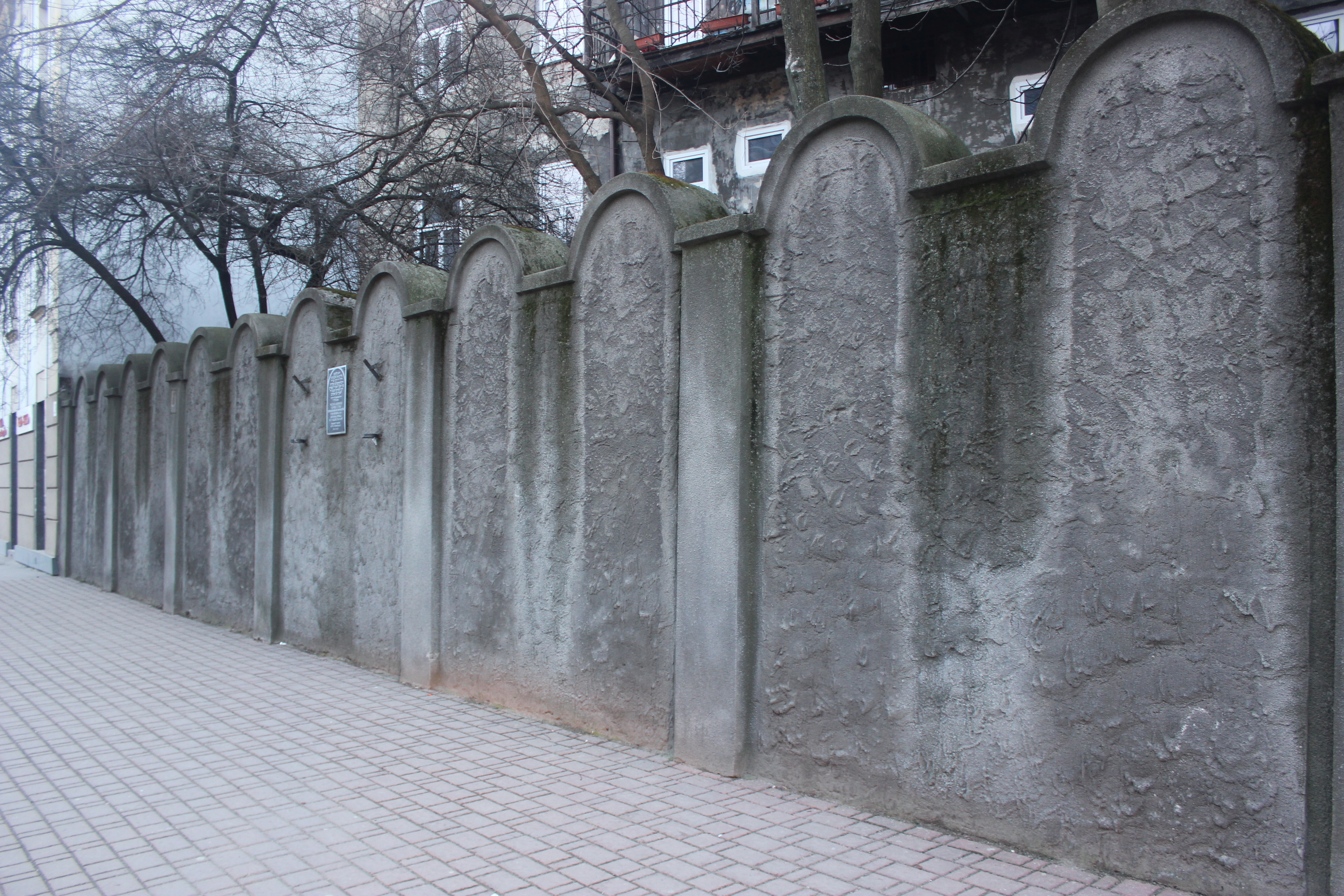
Kraków Ghetto Wall
Surviving masonry makes the ghetto’s system of segregation physically tangible today.
- 7Stop 7
Madritsch Workshop
A clothing workshop exposes the uneasy intersection of exploitation and temporary protection.
- 8Stop 8
Kraków Zabłocie Station
Rail lines reveal why occupation-era factories flourished in industrial Zabłocie.
 Stop 9
Schindler Factory
The former enamelware factory connects coerced labor, wartime profit, and rescue.
The app guides you from stop to stop with GPS and plays each story when you arrive.
More tours in Krakow
See all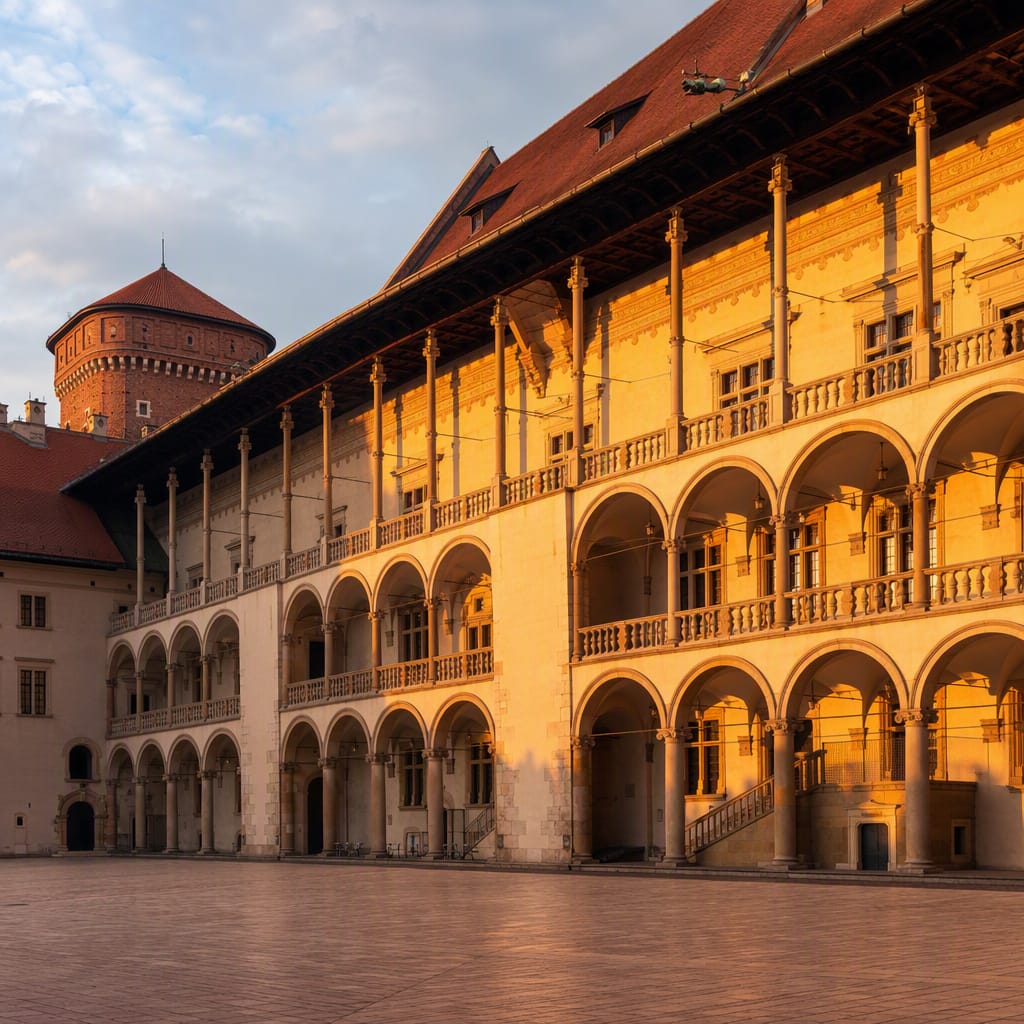 Voyay walking tour
Kraków’s Royal Road to Rynek
Follow kings, canons, and courtiers from Wawel into medieval Kraków
12 stops · 116 min · 1.5 km · Free
 Voyay walking tour
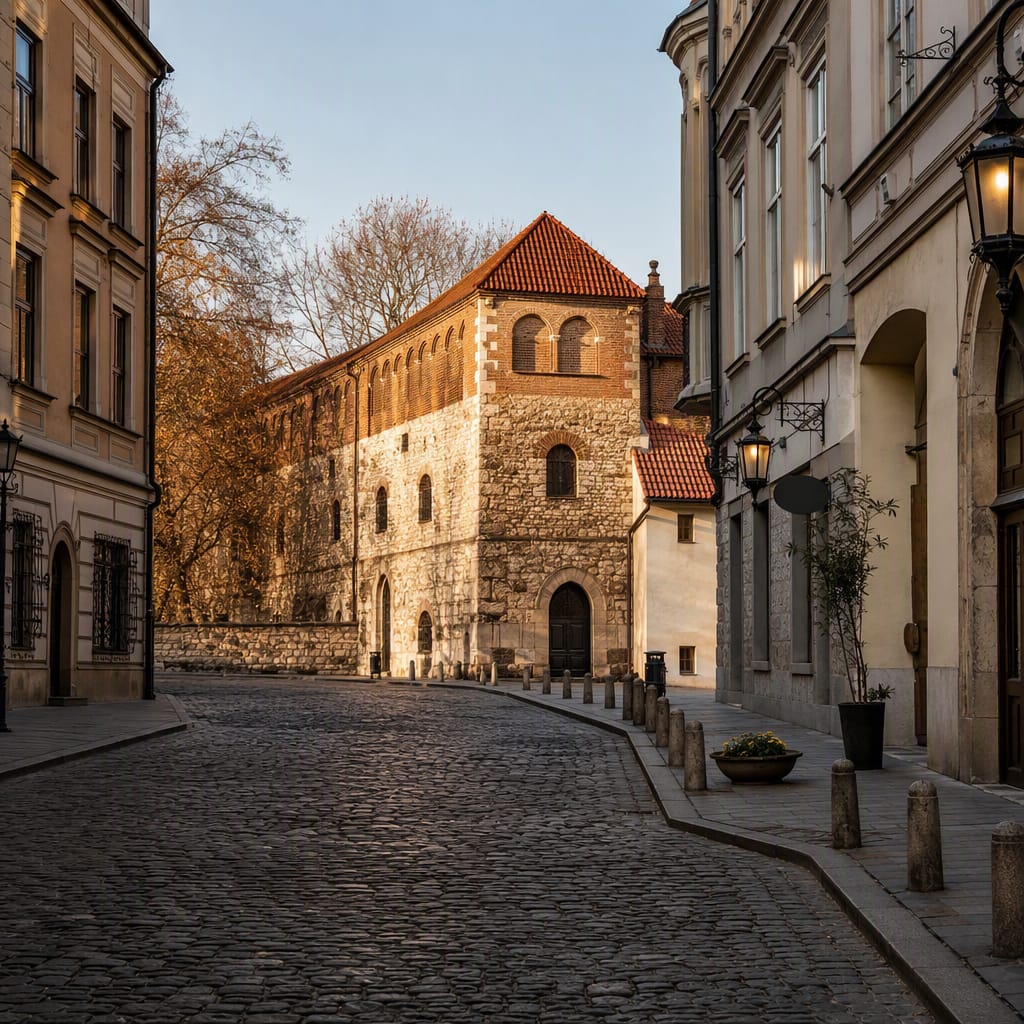
Jewish Kazimierz Beyond the Synagogues
Discover worship, learning, trade, and daily life before 1939
10 stops · 109 min · 2.1 km · Free
 Voyay walking tour
Nowa Huta: Utopia on Foot
Read a Socialist Model City Through Monuments, Courtyards, and Resistance
12 stops · 176 min · 5.8 km · Free