Markets and Militants of De Pijp
Workers, migrants and reformers behind Amsterdam’s liveliest neighborhood
- Amsterdam, Netherlands
- 12 stops
- 148 min
- 3.8 km
- History
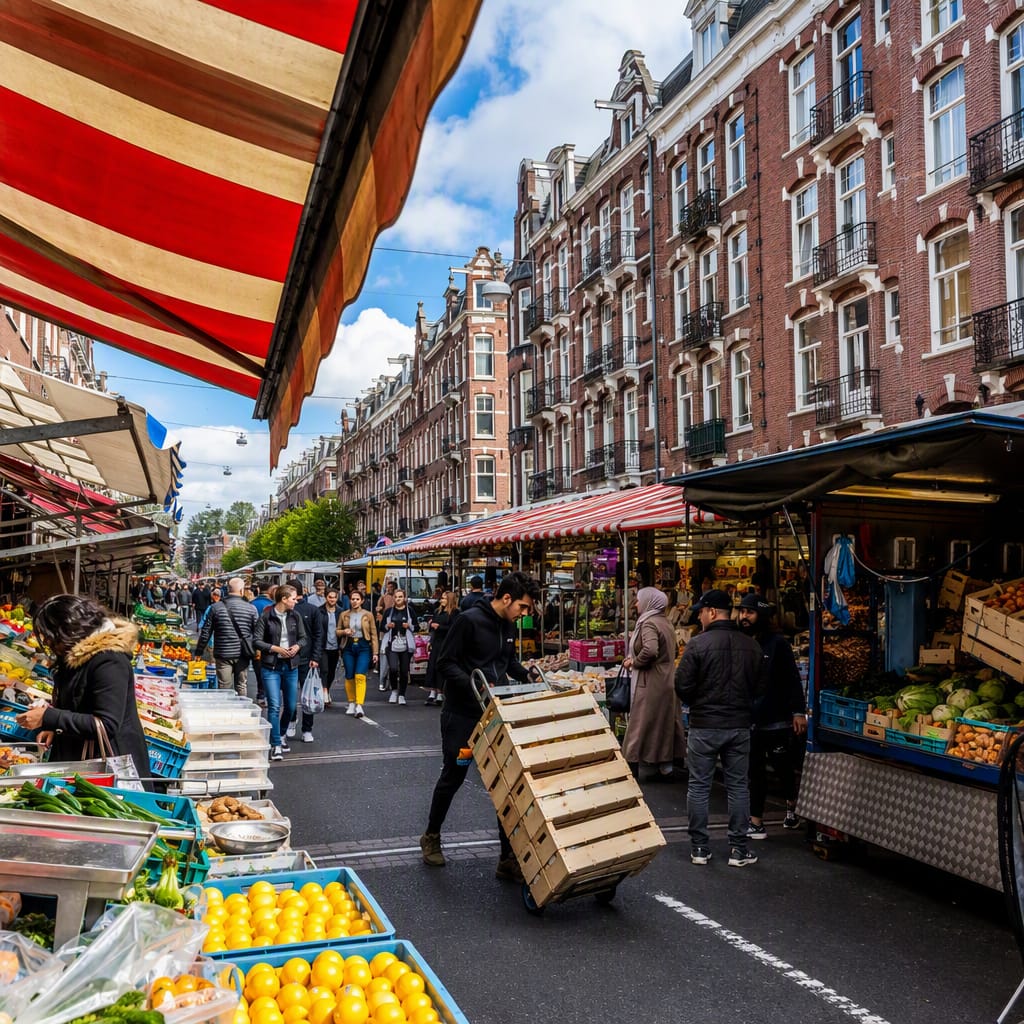
Try the first stop

Eerste Jacob van Campenstraat
Narrow brick streets reveal speculative housing built for Amsterdam’s industrial workforce.
De Pijp’s northern streets grew quickly as factories and workshops attracted thousands of workers. Narrow plots, repetitive façades and steep staircases expose the legacy of revolutiebouw: fast, speculative construction with cramped rooms and crowded courtyards. Look above today’s polished shops to read the working-class district hidden in the brickwork.
The route
12 stops, in order.
- Stop 1 · Free sample
Eerste Jacob van Campenstraat
Narrow brick streets reveal speculative housing built for Amsterdam’s industrial workforce.
- 2Stop 2
Heineken Brewery
A monumental former brewery introduces De Pijp’s industrial origins and changing economy.
 Stop 3
Albert Cuyp Market
Amsterdam’s famous street market began as essential infrastructure for working families.
 Stop 4
Gerard Dou Synagogue
This discreet synagogue preserves De Pijp’s Jewish community and labor history.
 Stop 5
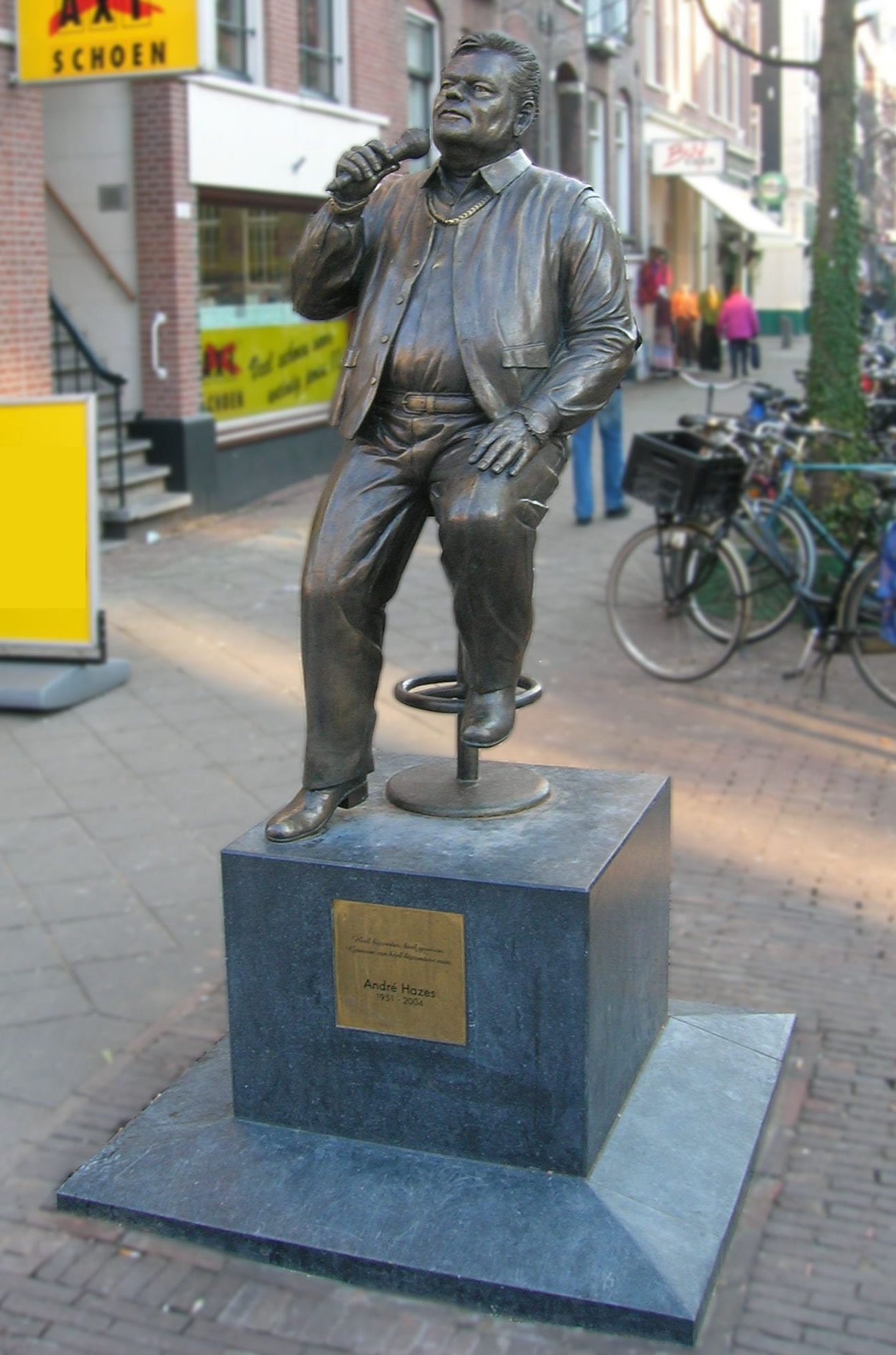
André Hazes Monument
A beloved neighborhood singer embodies De Pijp’s emotional working-class popular culture.
 Stop 6
Sarphatipark
A green civic refuge reveals reformers’ response to industrial overcrowding and disease.
 Stop 7
Rialto
A neighborhood cinema gives international and migrant perspectives a public cultural stage.
 Stop 8
Oranjekerk
A former pillar of Protestant life remains an adaptable neighborhood gathering place.
- 9Stop 9
Museum De Dageraad
A social-housing museum explains how organized workers demanded healthier, dignified homes.
 Stop 10
Pieter Lodewijk Takstraat
Sculptural Amsterdam School housing turns socialist reform into an unforgettable streetscape.
 Stop 11
Royal Asscher
A monumental diamond factory links skilled Jewish labor, unionism and catastrophic loss.
- 12Stop 12
Smaragdplein
Gemstone street names connect planned housing with De Pijp’s diamond-working heritage.
The app guides you from stop to stop with GPS and plays each story when you arrive.
More tours in Amsterdam
See all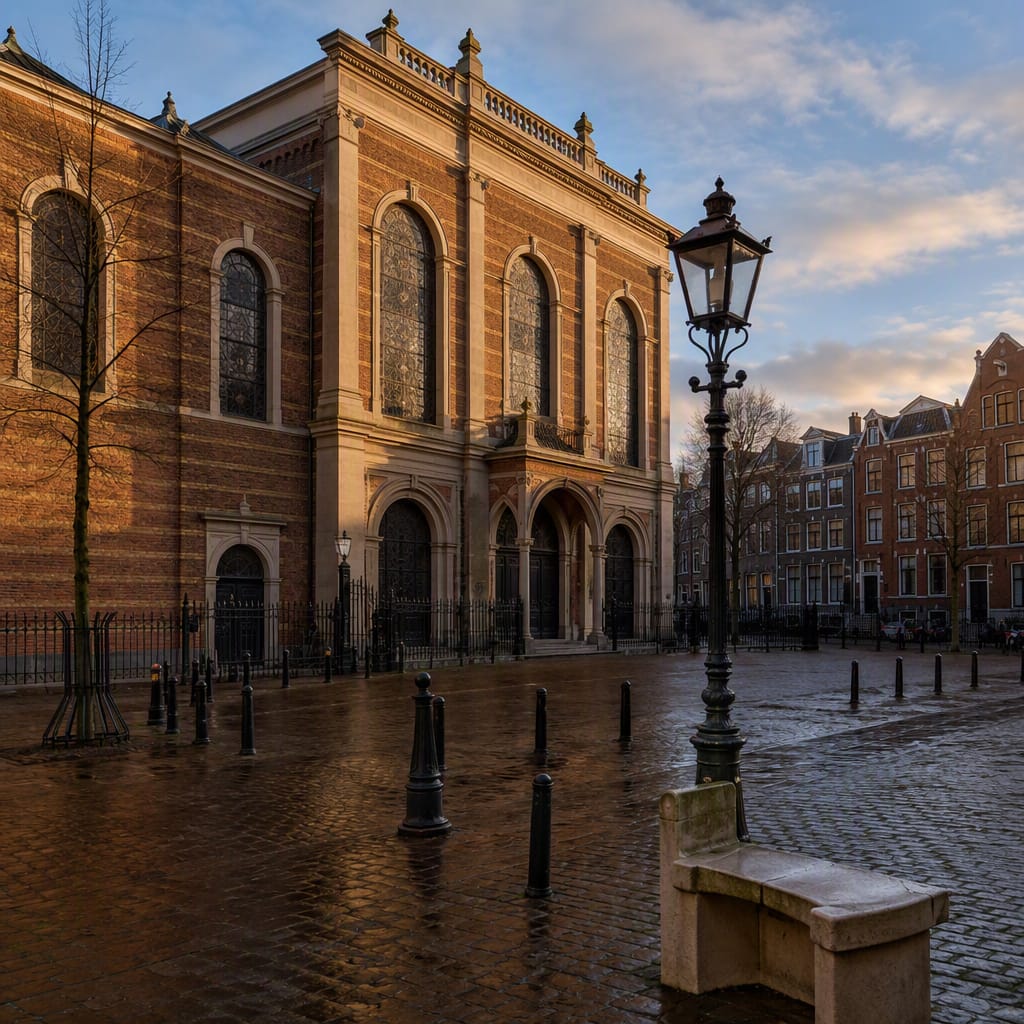 Voyay walking tour
Jewish Amsterdam: Faith and Resistance
Trace centuries of community, courage, persecution and living memory
11 stops · 123 min · 2.5 km · Free
 Voyay walking tour
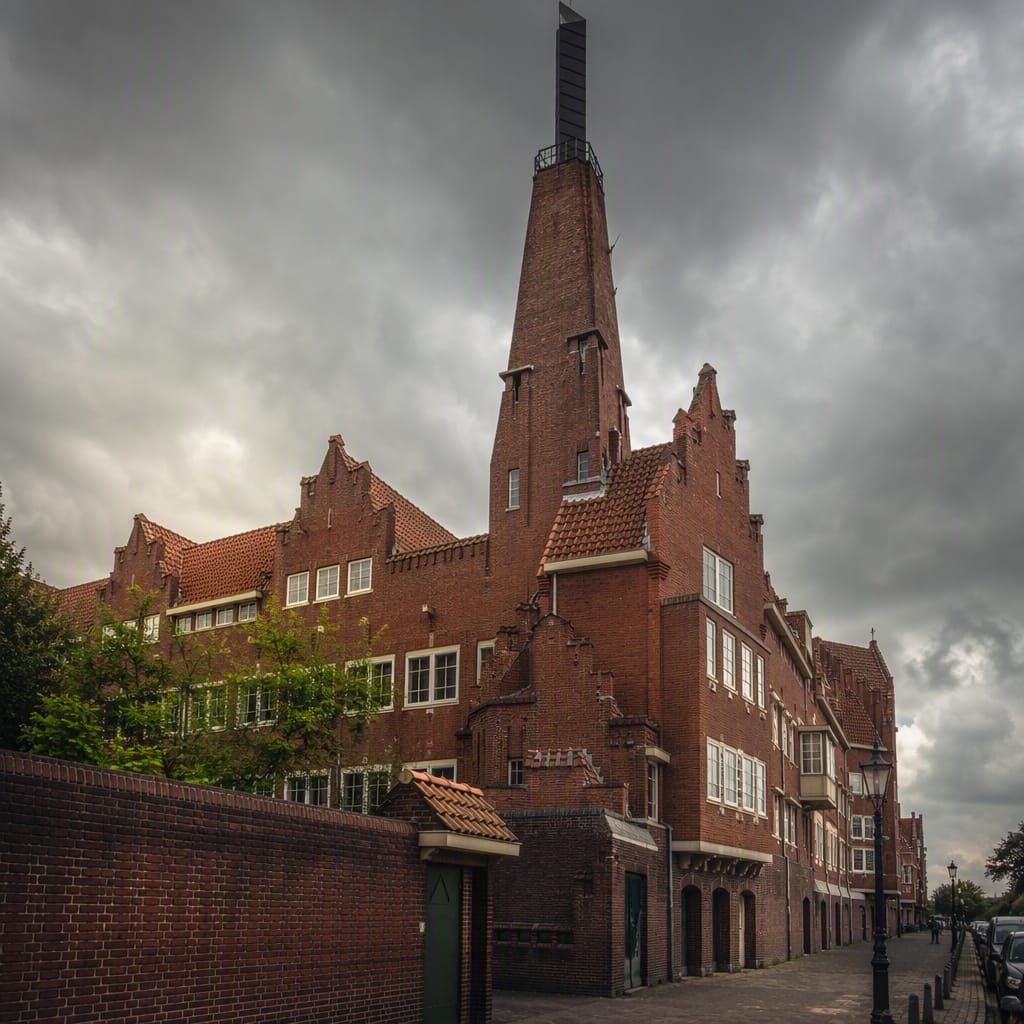
Brick Utopia in Spaarndammerbuurt
Follow bold brickwork from labor politics to housing masterpiece
12 stops · 138 min · 3 km · Free
 Voyay walking tour
Walking Watergraafsmeer’s Sunken Landscape
Read Amsterdam’s hidden polder through streets, slopes, and water
11 stops · 203 min · 8.3 km · Free