Varanasi walking tours
3 walking tours with a story at every stop. Pick one, then walk it at your own pace with the Voyay app.
Voyay tours
The intro and first 3 stops are free; Voyay Pro unlocks the rest.
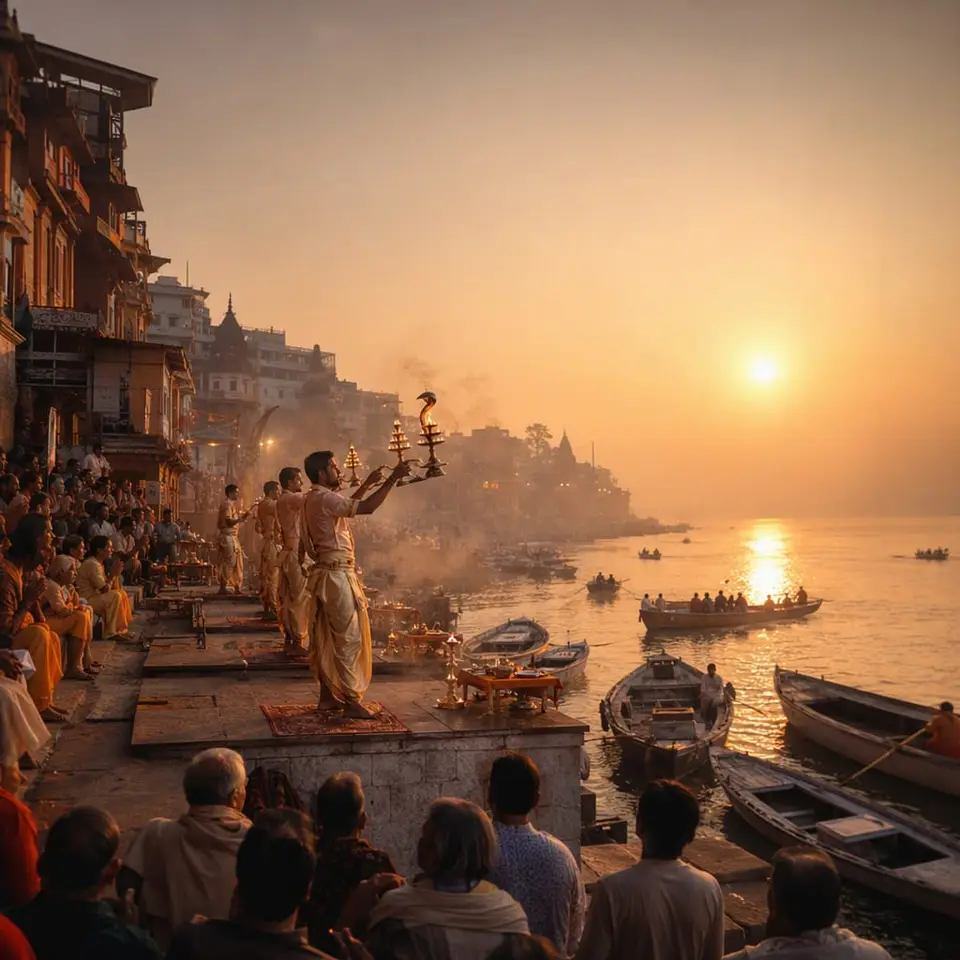 Voyay walking tour
Dawn Rituals Along the Ghats
Walk From Sunrise Worship to Kedar’s Living Temple Traditions
9 stops · 101 min · 2 km · Free to start
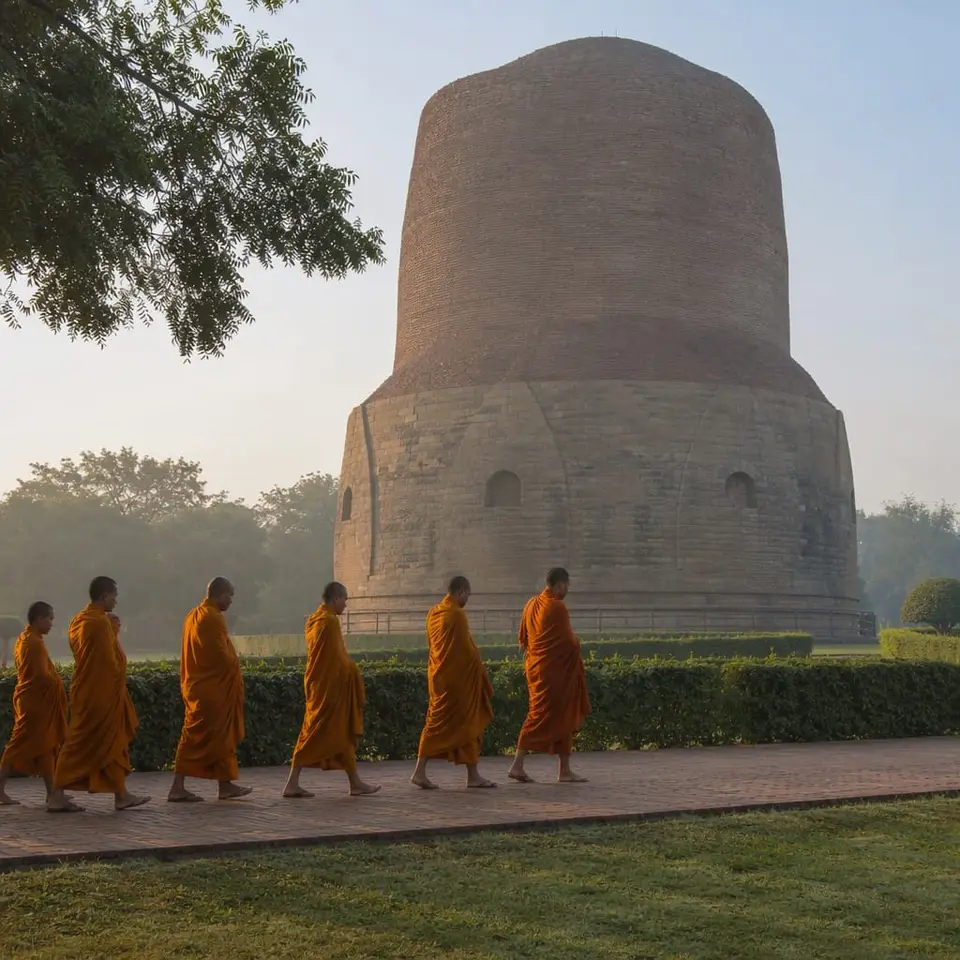 Voyay walking tour
Sarnath: Where Dharma Began
Ancient stupas meet living Buddhist traditions from across Asia
8 stops · 112 min · 3.5 km · Free to start
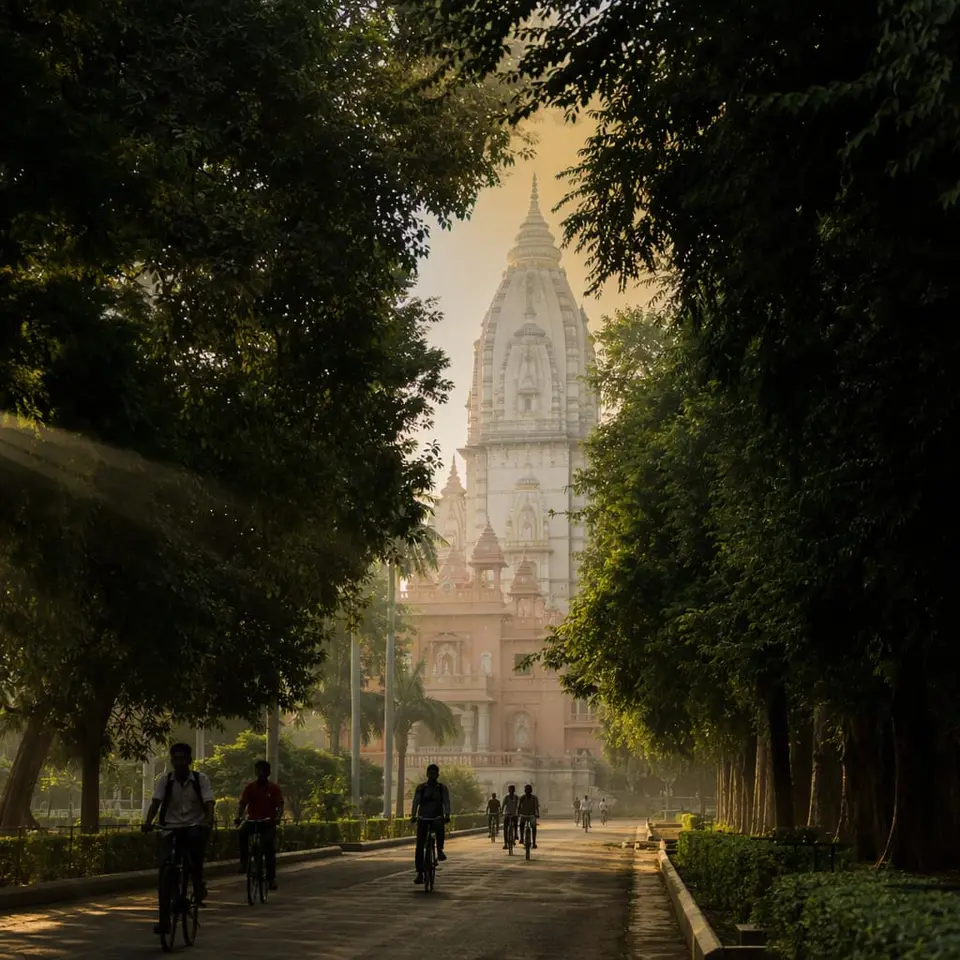 Voyay walking tour
Ideas and Icons of BHU
A shaded journey through art, ambition, science, and national identity
11 stops · 155 min · 4.9 km · Free to start
Exploring Varanasi on foot
Varanasi is dense, compact, and very walkable in its older districts, but the terrain changes the pace. The most rewarding area on foot is the riverfront along the ghats, where narrow lanes, steps, and small bazaars link temples, shrines, and neighbourhoods close to the Ganges. The old city is built around lanes that can be crowded and uneven, so short walks work better than long straight routes. Away from the river, the city opens out, and places such as Sarnath and the Banaras Hindu University area are easier to cover on foot because they have broader roads, planned grounds, and more space between sights.
These tours cover very different parts of the city. "Dawn Rituals Along the Ghats" follows sunrise worship and temple traditions by the river. "Sarnath: Where Dharma Began" explores the Buddhist heritage of Sarnath, from ancient stupas to living traditions. "Ideas and Icons of BHU" moves through the Banaras Hindu University campus and its mix of art, science, and national history. For walking in Varanasi, choose cooler months and start early in the day, since heat and crowding can make midday walking tiring. Wear comfortable shoes with good grip, especially for steps, stone paving, and uneven lanes near the ghats.
Varanasi walking tour questions
Is Varanasi a walkable city?
Yes, parts of Varanasi are very walkable, especially the old city around the ghats and the lanes near the river. Walking is the best way to experience the close layout of temples, shrines, and markets. Some streets are narrow, uneven, and crowded, so comfortable shoes and a slower pace help.
Which areas of Varanasi are best to explore on foot?
The ghats and the old city lanes are the main areas to see on foot, especially near Dashashwamedh Ghat, Assi Ghat, and Kashi Vishwanath Corridor. Sarnath is also good for walking because its heritage sites are spread across open ground. The Banaras Hindu University campus is another easy area for foot exploration.
When is the best time of year to walk around Varanasi?
The cooler months are the most comfortable for walking in Varanasi. Summer heat can be intense, and midday walking is harder then. Early morning and late afternoon are usually the best times of day, especially near the ghats. In the cooler season, longer walks through the old city and riverfront feel much easier.
How do self-guided walking tours in Varanasi work?
Pick a tour, open it in the Voyay app and start walking: a live map leads you from stop to stop and an audio guide tells the story of each place. You walk at your own pace, with no group or set start time. The intro and first 3 stops of every tour are free; Voyay Pro unlocks the rest.
From the blog
Reading for your time in Varanasi.
Varanasi Travel Guide: Ghats, Temples and Evening Aarti
How to see Varanasi: walk the ghats from Assi to Dashashwamedh, a dawn boat ride, Kashi Vishwanath, the evening Ganga aarti, Sarnath, and how to behave.