Rio de Janeiro walking tours
11 walking tours with a story at every stop. Pick one, then walk it at your own pace with the Voyay app.
Voyay tours
The intro and first 3 stops are free; Voyay Pro unlocks the rest.
 Voyay walking tour
Rio's Royal & Historic Heart
From Colonial Palaces to Modern Pyramids
11 stops · 150 min · 4.5 km · Free to start
 Voyay walking tour
Copacabana Deco, Waves, and Rituals
From glamorous façades to the social rhythms of the sand
10 stops · 129 min · 3.6 km · Free to start
 Voyay walking tour
Urca Between Rock and Bay
Ancient stone, quiet lanes, and sunset life beside Guanabara
11 stops · 135 min · 3.4 km · Free to start
 Voyay walking tour
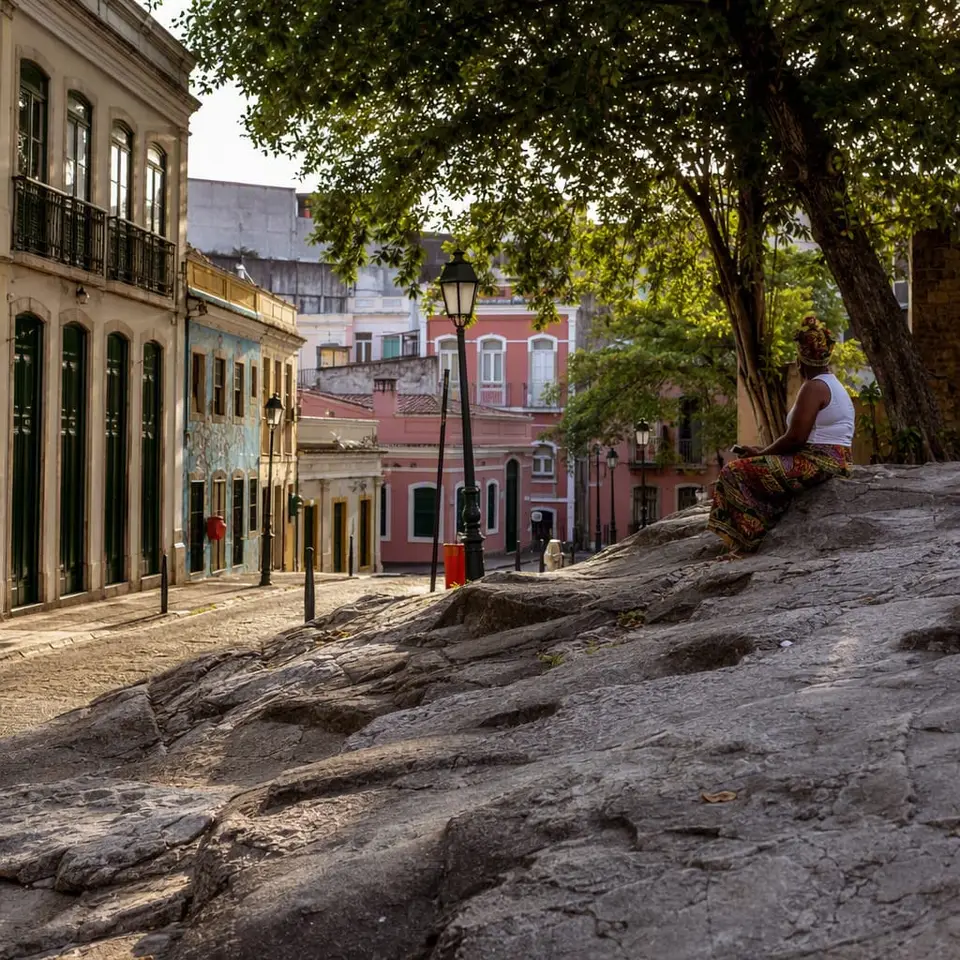
Little Africa’s Living Memory
Walk through slavery, resistance, sacred traditions and samba’s beginnings
10 stops · 149 min · 5 km · Free to start
 Voyay walking tour
Bayfront Modernism in Motion
Follow Burle Marx’s curves from concrete gardens to Sugarloaf views
12 stops · 180 min · 6.3 km · Free to start
 Voyay walking tour
Rails and Villas of Santa Teresa
Follow yellow trams through ateliers, mosaics and hillside architecture
10 stops · 139 min · 3.9 km · Free to start
 Voyay walking tour
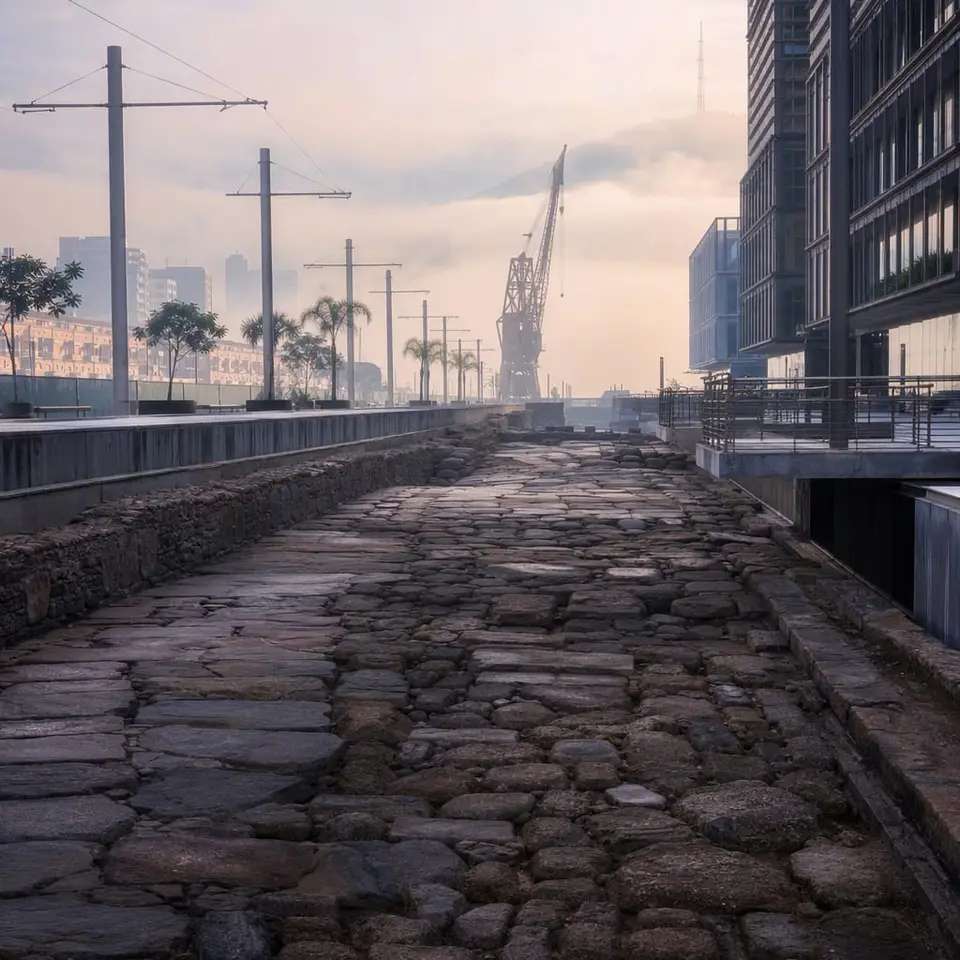
Little Africa: Stones of Freedom
Walk Rio’s port through archaeology, resistance, and Black community memory
10 stops · 131 min · 3.5 km · Free to start
 Voyay walking tour
Royal Rio, Memory Rebuilt
Walk from imperial gardens to science, loss, and living culture
12 stops · 181 min · 6.1 km · Free to start
 Voyay walking tour
Catete: Palace, Power, and Crisis
Follow Vargas’s final hours through Rio’s former presidential quarter
11 stops · 188 min · 7.1 km · Free to start
 Voyay walking tour
Tijuca’s Forest of Flowing Water
Walk Rio’s restored watershed through cascades, fountains, and living forest
7 stops · 119 min · 4.4 km · Free to start
 Voyay walking tour
Rituals Around the Maracanã
Follow the chants, bars and stories beyond the stadium gates
11 stops · 191 min · 7.4 km · Free to start
Exploring Rio de Janeiro on foot
Rio de Janeiro is spread between mountains, bays and long coastal edges, so walking here often means moving through distinct districts rather than one compact centre. The historic core around Centro is fairly flat and connects well with the port and Praça Mauá, while nearby neighbourhoods such as Santa Teresa rise onto steep hills and are best explored at a slower pace. Along the waterfront, Copacabana and Urca are easier to cross on foot, with long promenades and clear routes between landmarks.
These tours cover Rio’s imperial, modern, Afro-Brazilian and coastal stories. “Rio's Royal & Historic Heart” and “Royal Rio, Memory Rebuilt” focus on Centro, while “Little Africa’s Living Memory” and “Little Africa: Stones of Freedom” trace the port area’s history and cultural memory. “Copacabana Deco, Waves, and Rituals”, “Urca Between Rock and Bay”, and “Rails and Villas of Santa Teresa” explore seafront streets, hillside lanes and tram routes. Walk early or late in the day, since Rio can be hot and humid, and wear comfortable shoes with good grip for hills, uneven pavements and long crossings.
Rio de Janeiro walking tour questions
Is Rio de Janeiro a walkable city?
Yes, many parts of Rio de Janeiro are walkable, especially the flat streets of Centro, the waterfronts in Copacabana and Urca, and parts of the port area. Some neighbourhoods are much hillier, including Santa Teresa, so walking there takes more time and care. Distances can also be long, so plan by district rather than across the whole city.
Which areas of Rio de Janeiro are best to explore on foot?
Centro, Praça Mauá and the port area work well for walking because the streets are relatively connected and many major sights are close together. Copacabana is also easy to explore on foot along the beachfront and nearby streets. Urca has a quieter, compact layout, while Santa Teresa is rewarding for walkers who are comfortable with hills and steps.
When is the best time of year to walk around Rio de Janeiro?
The cooler, drier months are usually more comfortable for walking in Rio de Janeiro. Summer can be very hot, humid and rainy, which makes hill walking and longer routes harder. If you walk in warmer months, start early, stay hydrated and choose shaded or waterfront routes when possible. Good footwear helps in all seasons.
How do self-guided walking tours in Rio de Janeiro work?
Pick a tour, open it in the Voyay app and start walking: a live map leads you from stop to stop and an audio guide tells the story of each place. You walk at your own pace, with no group or set start time. The intro and first 3 stops of every tour are free; Voyay Pro unlocks the rest.
From the blog
Reading for your time in Rio de Janeiro.
Rio de Janeiro Guide: Centro Walk, Beaches and Views
Rio de Janeiro beyond the beach: a walk through Centro and up to Santa Teresa, then Copacabana, Ipanema, Sugarloaf, Christ the Redeemer and Carnival.