Waterfront Paths to Black Memory
Follow arrival, survival, institution-building, and remembrance across Charleston
- Charleston, United States
- 10 stops
- 222 min
- 16.2 km
- History
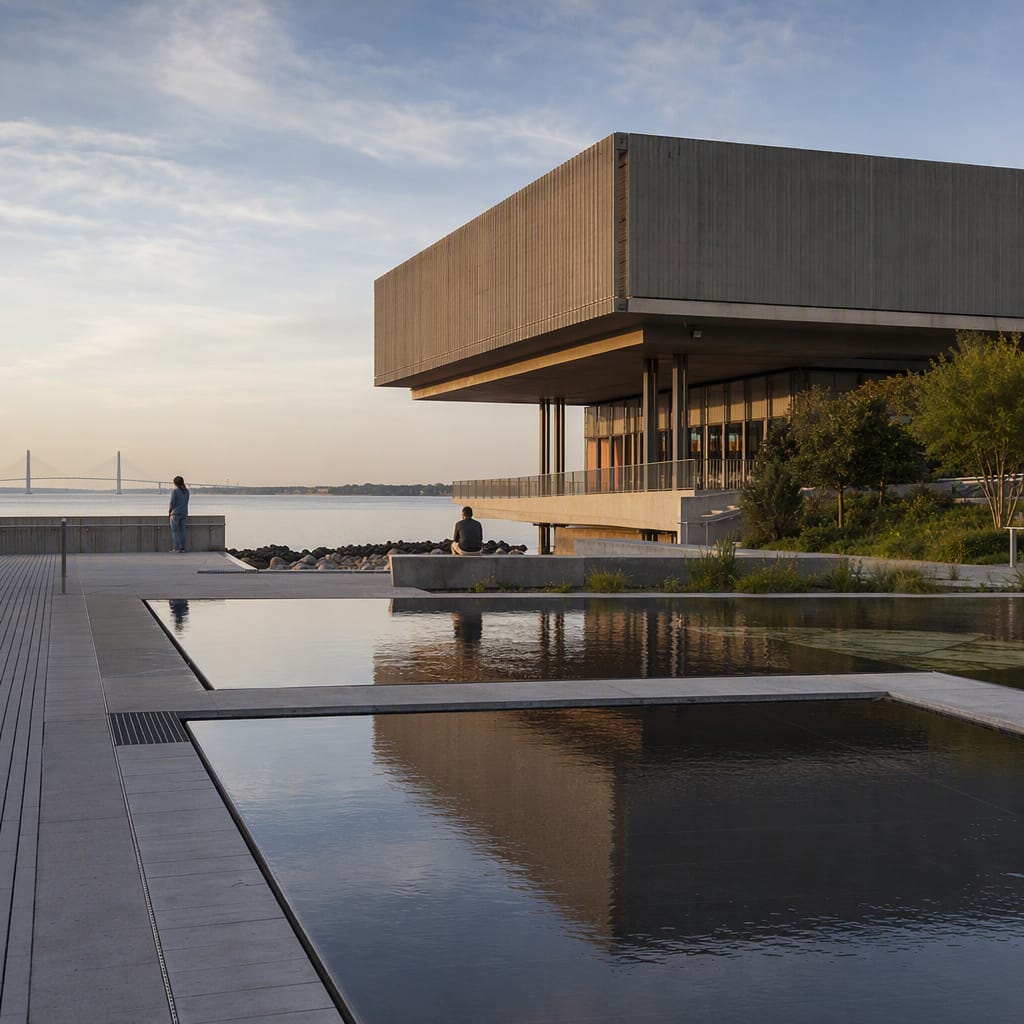
Try the first stop
Gadsden’s Wharf
Begin at the waterfront where captive Africans entered Charleston in devastating numbers.
Stand beside the Cooper River where Gadsden’s Wharf became one of the nation’s most consequential landing places for captive Africans near the end of the legal transatlantic trade. The original wharf is gone, but the water, salt air, and open horizon make this altered shoreline a powerful place to begin.
The route
10 stops, in order.
- 1Stop 1 · Free sample
Gadsden’s Wharf
Begin at the waterfront where captive Africans entered Charleston in devastating numbers.
- 2Stop 2
African Ancestors Memorial Garden
A contemplative landscape turns the ground of arrival into living remembrance.
- 3Stop 3
International African American Museum
Charleston’s waterfront museum connects African origins, diaspora, resistance, and family history.
- 4Stop 4
Gadsdenboro Park
An open park reveals a vanished Black waterfront neighborhood beneath modern Charleston.
 Stop 5
Mother Emanuel AME Church
A living congregation embodies Black faith, resistance, grief, and repeated renewal.
- 6Stop 6
Avery Research Center
A former Black school now safeguards the Lowcountry’s community archives and voices.
 Stop 7
Morris Street Business District
Ordinary storefronts reveal how Black enterprise sustained community during segregation.
 Stop 8
Morris Brown AME Church
A Reconstruction-era congregation links independent worship with generations of civic action.
- 9Stop 9
Cannon Street YMCA
A segregated community hub whose young ballplayers exposed racism in American sports.
- 10Stop 10
Anson African Burial Ground
A recovered burial ground centers ancestral dignity, community authority, and remembrance.
The app guides you from stop to stop with GPS and plays each story when you arrive.
More tours in Charleston
See all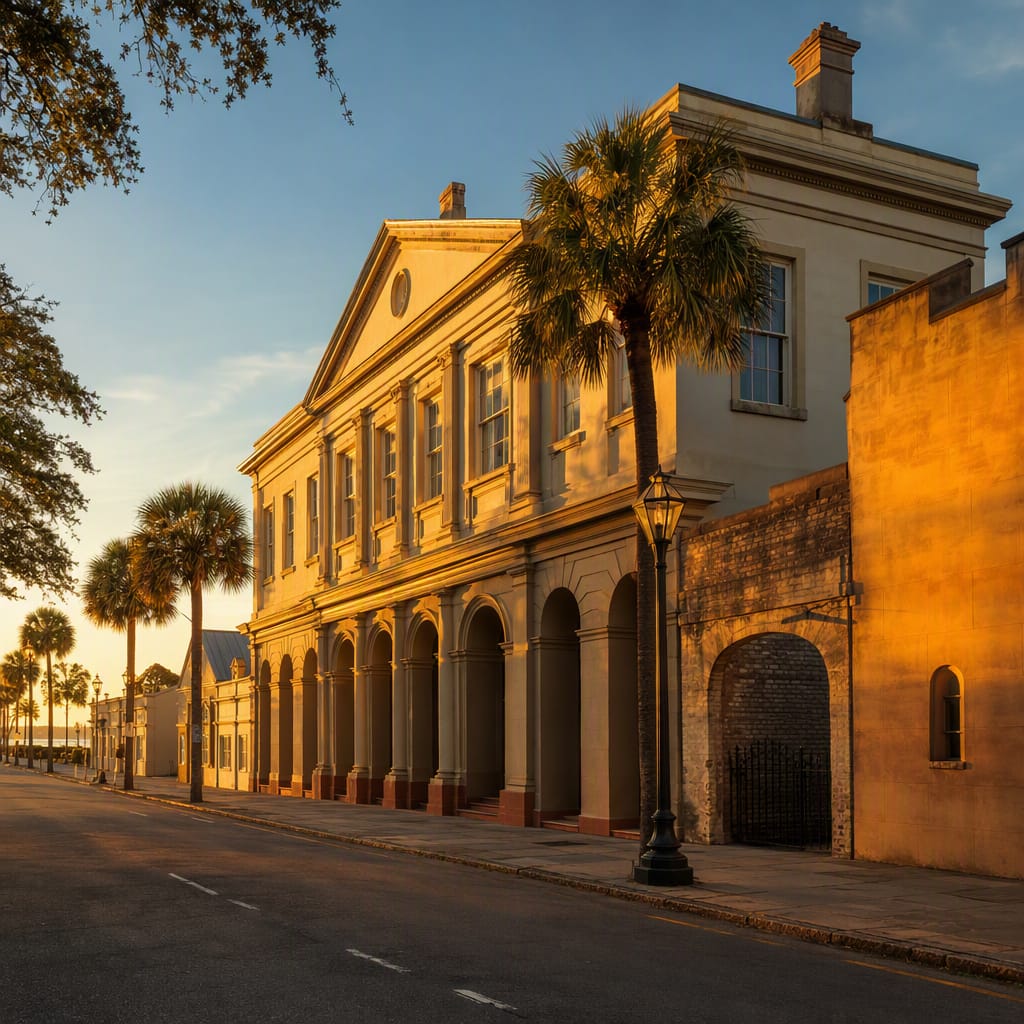 Voyay walking tour
Revolutionary Charleston: Ink, Ale, Exchange
Follow Patriots, Printers, Taverns, and Trade Through the French Quarter
11 stops · 139 min · 3.6 km · Free
 Voyay walking tour
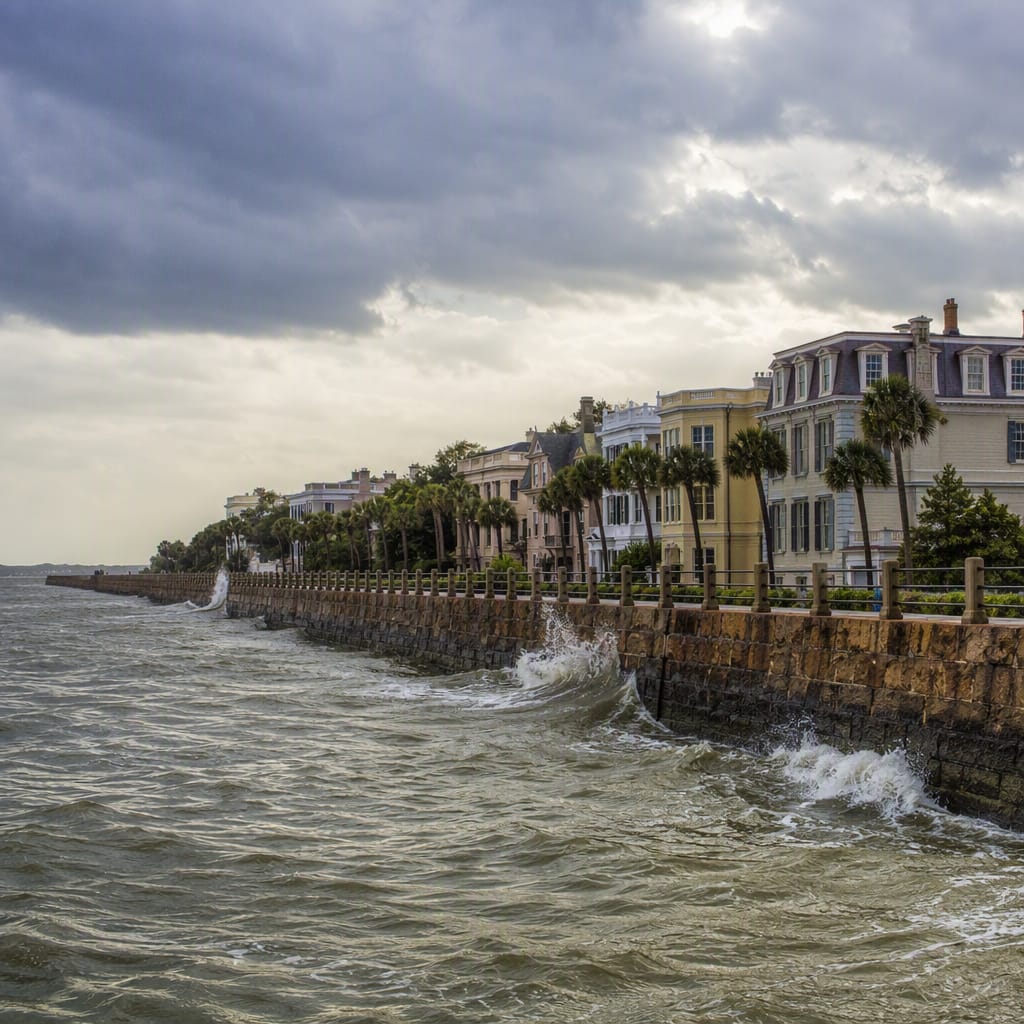
Charleston Against the Rising Tide
Trace buried creeks, battered seawalls, and a city adapting
12 stops · 158 min · 4.5 km · Free
 Voyay walking tour
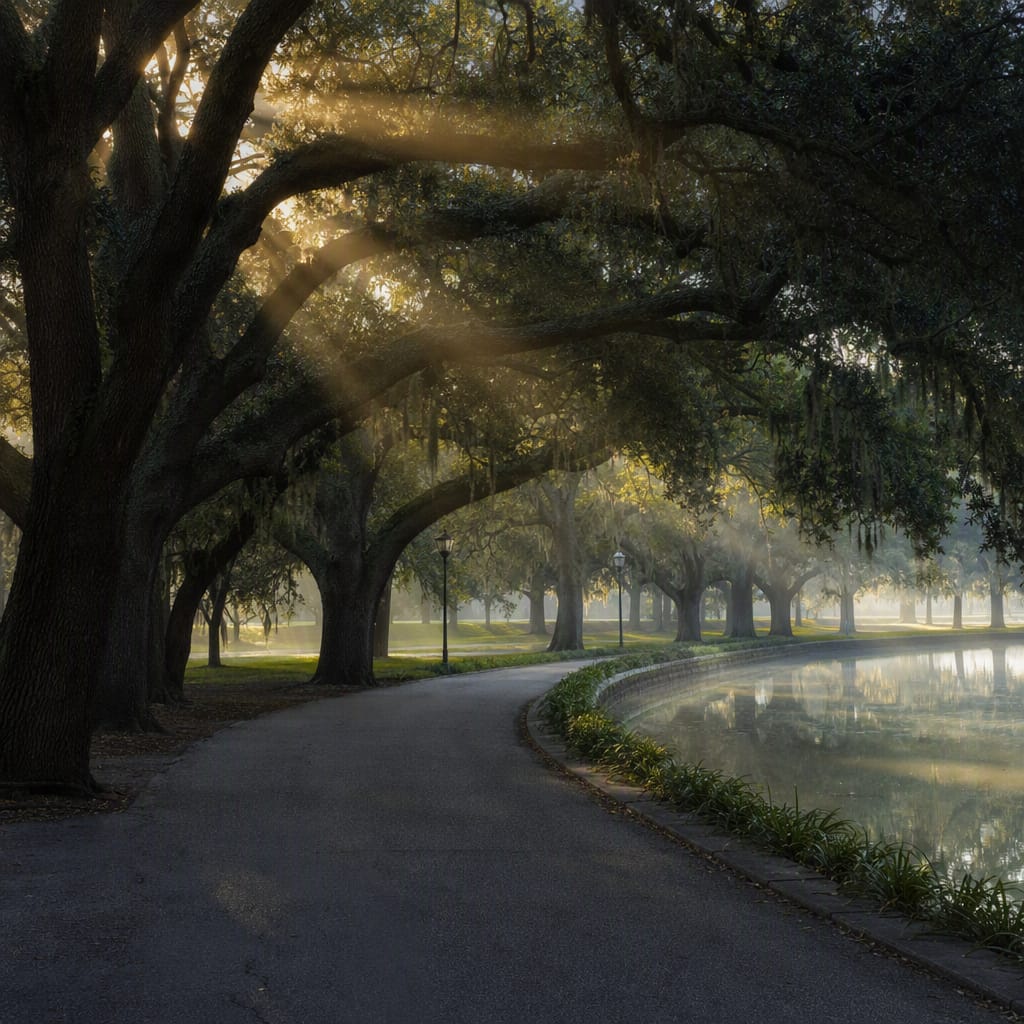
Hampton Park Through Hidden Time
Trace racing, imprisonment, remembrance, spectacle, and contested Charleston memory
10 stops · 109 min · 2.1 km · Free