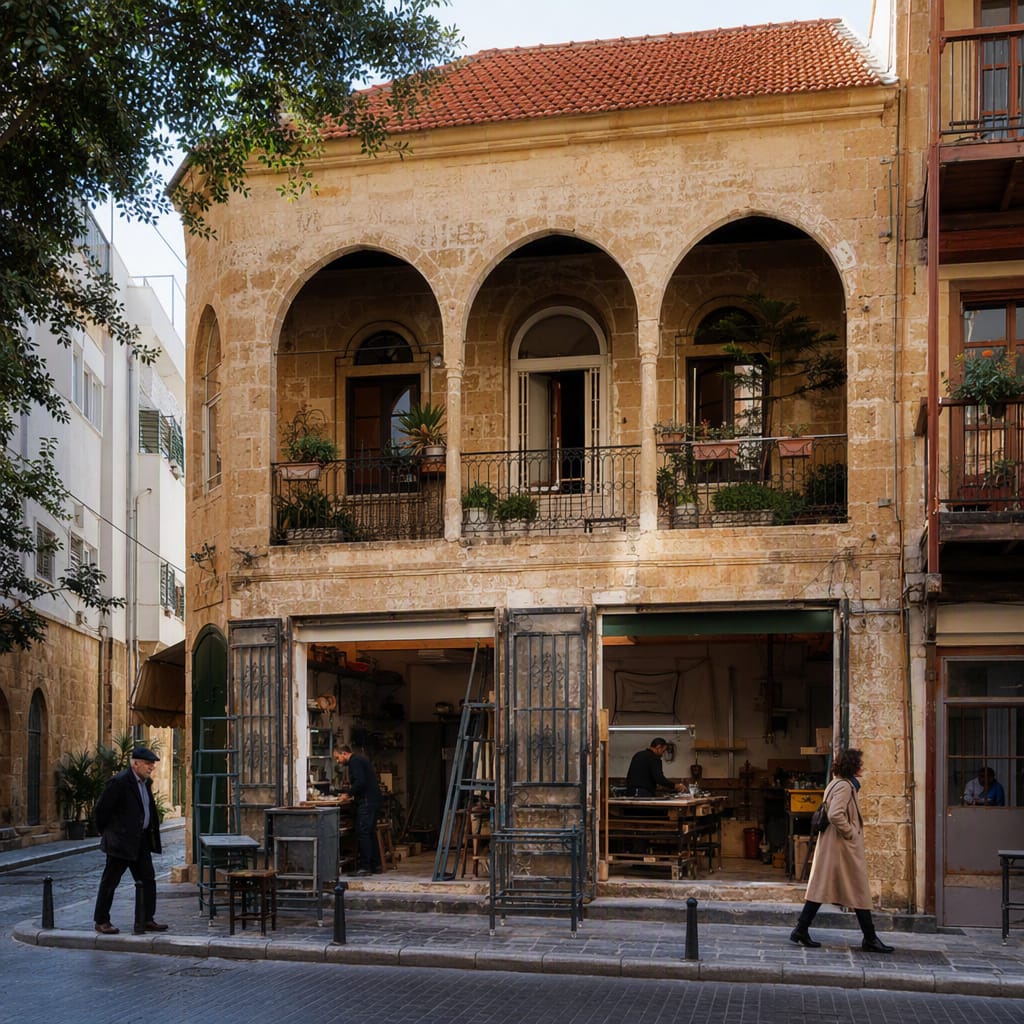
Unearthing Berytus in Downtown Beirut
Roman ruins and rebuilt landmarks reveal Beirut’s layered urban memory
- Beirut, Lebanon
- 11 stops
- 128 min
- 2.7 km
- History
Try the first stop

Grand Serail
Ottoman authority rises above Roman ruins and Beirut’s reconstructed civic center.
Begin on Serail Hill, where an Ottoman military barracks became a French Mandate headquarters and, later, Lebanon’s seat of government. Its restored stone facade introduces a recurring theme: every regime has adapted Beirut’s inherited architecture. From the legal perimeter, look downhill toward the Roman city buried beneath the modern capital.
The route
11 stops, in order.
- Stop 1 · Free sample
Grand Serail
Ottoman authority rises above Roman ruins and Beirut’s reconstructed civic center.
 Stop 2
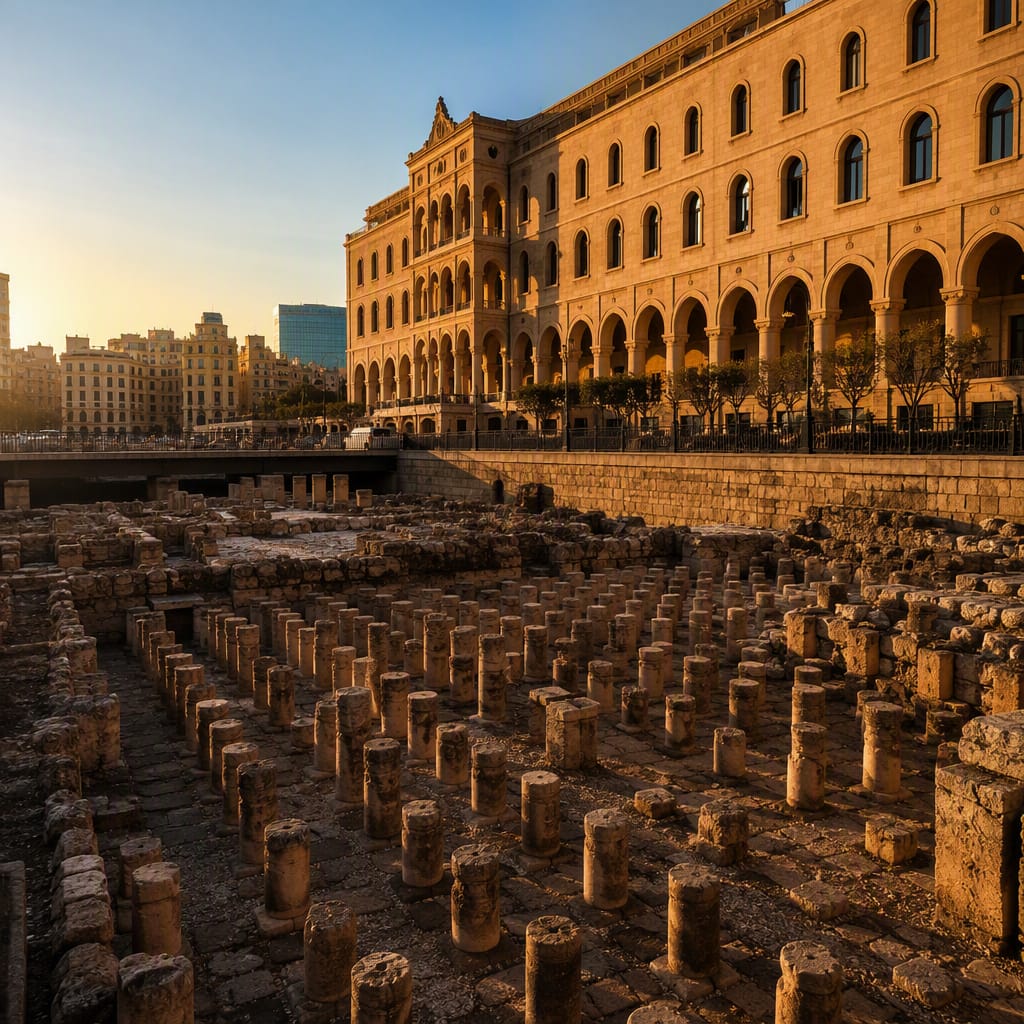
Roman Baths of Beirut
Hypocaust pillars and water channels reveal the everyday engineering of Roman Berytus.
 Stop 3
Nejmeh Square
Mandate-era geometry turns rebuilt Beirut into a carefully staged civic theater.
 Stop 4
Saint George Orthodox Cathedral
A cathedral crypt lets visitors descend through Beirut’s buried civilizations.
 Stop 5
Grand Théâtre de Beyrouth
A shuttered Mandate theater exposes the unfinished edges of Beirut’s reconstruction.
 Stop 6
Saint George Maronite Cathedral
Roman columns, Ottoman-era stonework and postwar restoration meet in one view.
 Stop 7
Martyrs’ Square
A battle-scarred monument anchors Beirut’s most contested and symbolic public space.
 Stop 8
Al-Omari Grand Mosque
Crusader vaults and Islamic worship share one of Beirut’s deepest architectural palimpsests.
 Stop 9
Beirut Souks
Ancient street alignments survive inside Beirut’s most debated postwar reconstruction project.
 Stop 10
Al-Majidiyyeh Mosque
An Ottoman mosque marks a vanished shoreline now stranded inland by reclamation.
- Stop 11
Ancient Tell of Beirut
Bronze Age defenses beneath modern streets push Beirut’s story beyond Roman Berytus.
The app guides you from stop to stop with GPS and plays each story when you arrive.