Venice by Water: Grand Canal, Gondolas and Palaces
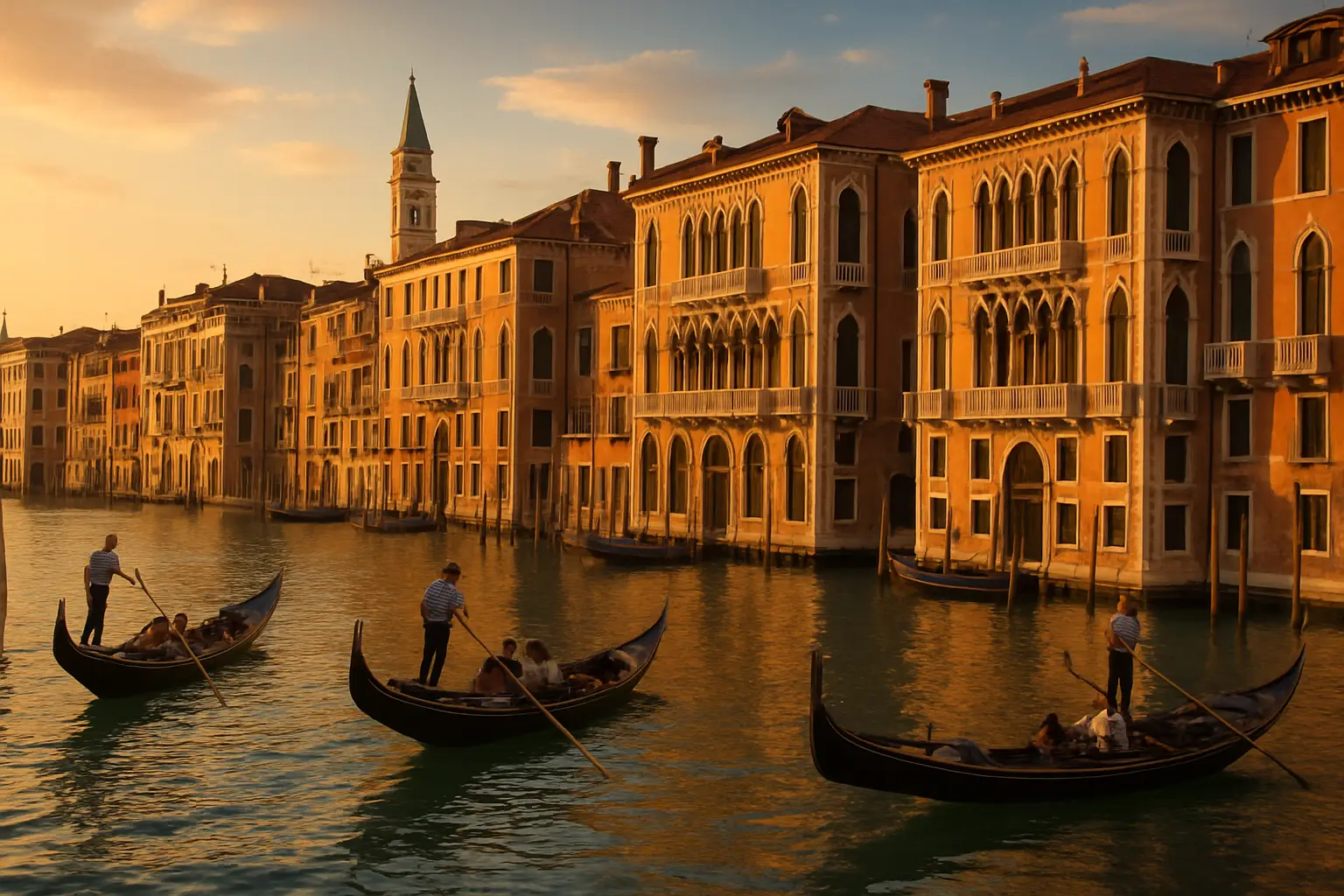
The cheapest good way to see Venice from the water is the slow vaporetto (water bus) along the Grand Canal. Line 1 runs from Piazzale Roma to the Lido and stops at nearly every pier along the canal, so you pass the palace façades at an easy pace. A gondola is the slow, expensive, beautiful option: rates are set by the city and charged per boat, not per person. A traghetto, a gondola ferry that crosses the Grand Canal where there's no bridge, gives you a minute or two in a gondola for a small fare.
Then walk. Venice is small, and the back canals are best seen from the bridges and fondamenta (canal-side paths) that cross and line them.
The Grand Canal
The Grand Canal is an S-shaped waterway, about 3.8 km long, that splits the city in two. Most of Venice's great palazzi face it, because for centuries the water side was the front door. From a vaporetto, look out for:
- Ca' d'Oro, the Gothic palace whose façade was once gilded. It now houses the Galleria Giorgio Franchetti.
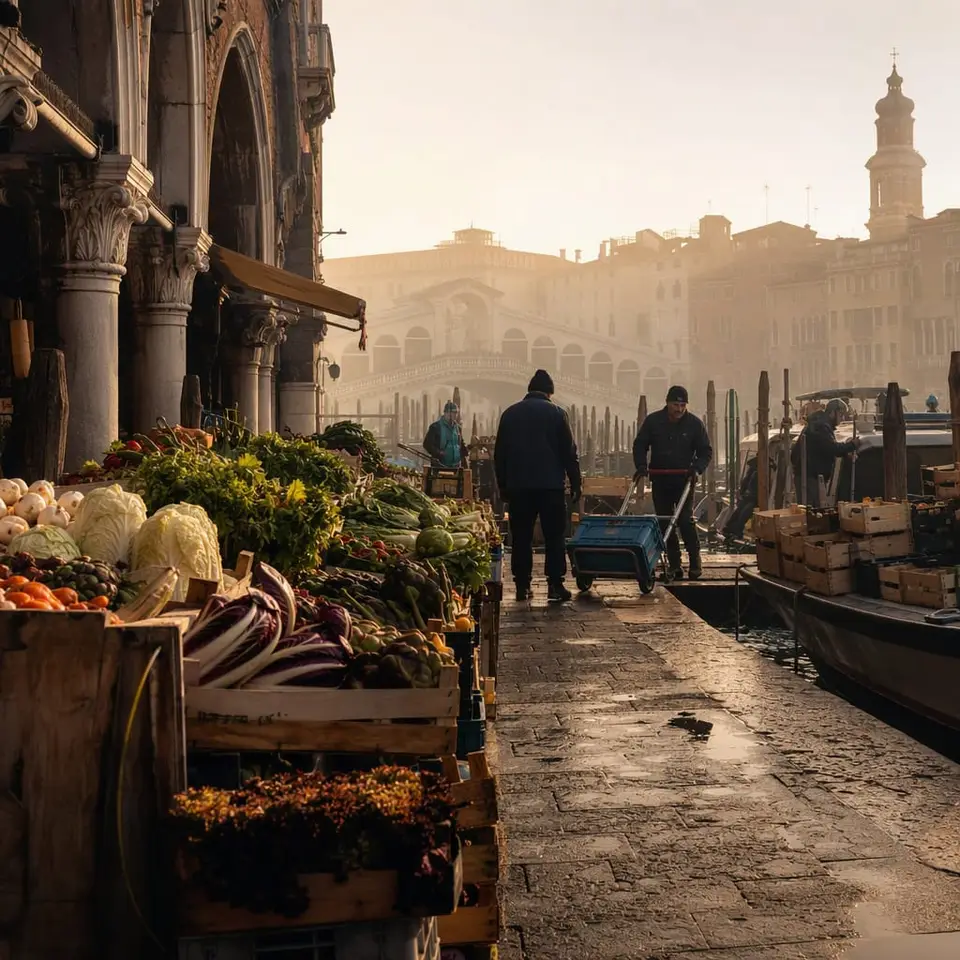
- The Rialto Bridge and the Rialto market, with the fish market (Pescheria) under its Gothic-style loggia on the water.
- Ca' Rezzonico, an 18th-century palace that is now a museum of 18th-century Venice.
- Palazzo Venier dei Leoni, the low, unfinished palace that holds the Peggy Guggenheim Collection.
- Santa Maria della Salute, the domed baroque church at the canal's mouth, opposite St Mark's.
Ride early in the morning or in the evening, when the boats are less full and you have a better chance of a seat at the front or back. Ticket prices and passes change, so check the city transport operator ACTV before you go.
Gondolas and traghetti
- Gondolas. A standard ride lasts about 30 minutes, and evening rides cost more. Official tariffs are posted at each gondola station (stazio), and the price covers the boat, which seats several people. Agree on price, length and route before you step in. Starting from a quieter station and asking for back canals rather than the Grand Canal gives a calmer ride.
- Traghetti. These gondola ferries cross the Grand Canal at a few fixed points. Locals often stand for the crossing. Which crossings run, and when, changes over time, so treat them as a bonus rather than something to plan around.
- Water taxis. Fast, private and expensive. Useful with heavy luggage, otherwise not needed.
Palaces worth going inside
- Doge's Palace. The seat of the Venetian Republic's government, next to St Mark's Basilica. Inside, the Chamber of the Great Council holds Tintoretto's huge Paradise. The Bridge of Sighs connects the palace to the prisons across the canal.
- Ca' d'Oro. The art collection is good, but the loggia over the Grand Canal is the reason to go.
- Ca' Rezzonico. Rooms furnished as an 18th-century palace, with ceilings painted by Tiepolo.
- Ca' Pesaro. A baroque palace that houses the city's modern art museum.
Hours and tickets for the Doge's Palace, Ca' Rezzonico and Ca' Pesaro are on the Venice civic museums site.
Across the city on foot, Cannaregio to the Zattere
This route crosses the city from north to south and links the water views above with the quieter canals in between. Allow a full morning with stops.
- Fondamenta della Misericordia (Cannaregio). Start on this long canal-side path in the north of the city, lined with bars and lived-in houses. It is quiet in the morning.
- Strada Nova and Ca' d'Oro. Walk south to the Strada Nova, Cannaregio's main shopping street, and step down to Ca' d'Oro.
- Campo Santi Apostoli to the Rialto Bridge. Follow the signs ("per Rialto") through the narrow streets to the bridge.
- The Rialto market. Cross the bridge to the market side: Campo de l'Erberia, the Pescheria and the church of San Giacomo di Rialto. The fish market usually trades in the morning from Tuesday to Saturday.
- Back over the bridge and along the Mercerie to St Mark's. The Mercerie are the chain of shopping streets that link the Rialto to Piazza San Marco. They are packed at midday, so keep moving.
- Accademia Bridge to the Zattere. From St Mark's, head west through Campo Santo Stefano and cross the wooden Accademia Bridge into Dorsoduro. Continue south to the Zattere, the broad waterfront facing the Giudecca Canal, which gets the evening sun.
Step 4 is where Voyay's Rialto: Money, Markets, and Power audio tour spends its time, from the Erberia and San Giacomo past the old bank site, the Rialto Bridge and the Pescheria, ending at the Scuola dei Calegheri. Its other Venice walks go out into the lagoon, to Murano, Torcello, San Michele and the Lido.
Fees, high water and bridges
On selected days, mostly in spring and early summer, day visitors to the historic centre pay an access fee, and overnight guests register for an exemption. The dates and rules change each year, so check the official Venice access fee site before you go.
High water (acqua alta) is most likely from autumn into winter. The MOSE flood barriers were first raised in October 2020 and now keep out the highest tides, but low-lying areas like St Mark's can still flood on some days, so pack shoes that can get wet. Almost every bridge has stairs; with a stroller or limited mobility, the vaporetto is the easier way across.
The Rialto to St Mark's corridor is busiest from late morning to late afternoon, which is a good time to be in Cannaregio, Castello or Dorsoduro instead. Don't swim in the canals or sit on bridges and private landing steps. Large cruise ships have been banned from St Mark's Basin and the Giudecca Canal since August 2021.
Venice and its lagoon have been on the UNESCO World Heritage List since 1987.